
Squid Jigging
How to jig for squid from Puget Sound piers at night: long light rods, glowing jigs, single and multi-jig rigs and fishing the lighted edge.
How to jig for squid from Puget Sound piers at night: long light rods, glowing jigs, single and multi-jig rigs and fishing the lighted edge.
Squid jigging brings a nighttime fishery within reach of shore anglers. Market squid, also called Pacific or opalescent squid, gather around lighted water to feed after dark. A boat isn't necessary, and WDFW describes the gear as reasonably priced. It's a family-friendly fall and winter option, with room to learn through watching and practice.
The main skill is feeling a small change. Squid wrap their tentacles around a lure rather than biting it like a fish. You lift to set, then keep steady pressure as you bring the squid up.
What It Is and When It Beats Other Methods
A squid jig is a lure with upward-slanting sharp wires called prongs. Almost all squid jigs glow or contain material that reflects light. A glow jig gives off light after charging. A reflective jig catches the light already around it.
You work the jig where squid can see and reach it. A single lure can be cast away from the pier and retrieved. A multi-jig rig can be lowered into lighted water and moved slowly up and down. WDFW describes both, so pick the one that fits the pier and its light.
Why Squid Come to the Light
Squid feed mainly at night. They wait in the dark fringes beside lighted water, then dart into the bright area after young herring and other small fishes. The light edge is the boundary between lighted and dark water. Think about that boundary before thinking about how far you can cast.
A luminous or reflective jig gives squid something visible to approach. Squid wrap their tentacles around prey, which explains why their contact can feel different from a fish striking a lure. The useful signal may be a slight change in how the tackle feels.
Pier lighting creates a place to start searching, but it doesn't tell you the squid's depth. Squid school, and anglers beside each other can have different results because their jigs are at different depths. Work on placement before assuming you need a different color.
Squid jigging suits a trip when:
- You want shore access. Lighted public piers offer places to reach squid without a boat.
- You want an evening activity. Squid feed mainly at night, and the pier fishery is associated with fall and winter.
- You want a modest gear setup. WDFW describes squid jigging as an inexpensive way to fish.
- You want to learn with family. WDFW's squid jigging post describes it as family friendly.
For other presentations, see Jigging and Mooching. If you plan to combine activities from a pier, use Crabbing and Shrimping and check the rules and access policies for each activity.
Target Species and Where in Washington
Market squid are the main target. They are the most common squid along Washington's coast, in the Strait and in Puget Sound. Public piers provide much of the access described here, though squid can also be fished from an anchored boat.
Use the Washington Marine Areas Explained block below to match a pier with its fishing zone. A listed light or cleaning station helps you plan. It isn't permission to fish at night, so check each pier's posted hours.
Squid in Washington
Market squid are usually under a foot long. Adults in inside waters average about 8 inches, measured across the mantle and tentacles. The mantle is the squid's main body. Its life span is probably no more than a year, and it lives in schools.
Washington's squid movement appears to include both migrating squid and resident populations. WDFW's squid jigging post describes migration and spawning from September through February. Its dockside survey post also places peak spawning in that period. Those months describe squid biology, not fishing permission.
Humboldt squid are a different squid found mainly off the coast. WDFW's dockside survey post also records them in the Strait, Puget Sound and Hood Canal. Treat that as a sighting record, not a reason to plan this pier method around them. Check WDFW's rules for both market squid and Humboldt squid.
See Squid for species context and Puget Sound Squid for the fishery overview.
Pier by Marine Area
Washington Marine Areas Explained
A Marine Area is WDFW's numbered saltwater fishing zone. Seasons and rules are set by area, so match your pier to its area before checking regulations. Find yours on All Marine Areas (find your area).
| Marine Area | Where It Is |
|---|---|
| Marine Area 6 (Eastern Strait of Juan de Fuca) | Port Angeles City Pier. |
| Marine Area 8-1 (Deception Pass/Skagit Bay) | Coupeville Pier. |
| Marine Area 8-2 (Port Susan/Port Gardner) | Everett 10th Street Marine Park Pier. |
| Marine Area 9 (Admiralty Inlet) | Edmonds Pier and Port Townsend Union Wharf. |
| Marine Area 10 (Seattle/Bremerton) | Seattle and Kitsap piers. |
| Marine Area 11 (Tacoma/Vashon) | Des Moines and Les Davis piers. |
| Marine Area 13 (South Puget Sound) | Clyde Davidson Pier in Steilacoom. |
Squid Piers by Marine Area

- 1. Port Angeles City Pier, Marine Area 6 (Eastern Strait of Juan de Fuca)
- 2. Coupeville Pier, Marine Area 8-1 (Deception Pass/Skagit Bay)
- 3. Everett 10th Street Marine Park Pier, Marine Area 8-2 (Port Susan/Port Gardner)
- 4. Edmonds Pier and Port Townsend Union Wharf, Marine Area 9 (Admiralty Inlet)
- 5. Seacrest Park Pier, Shilshole Marina Pier and the Kitsap piers, Marine Area 10 (Seattle/Bremerton)
- 6. Des Moines Marina Pier and Les Davis Pier, Marine Area 11 (Tacoma/Vashon)
- 7. Clyde Davidson Pier, Marine Area 13 (South Puget Sound)
Marine Area boundaries: Washington Department of Fish and Wildlife (WDFW).
Simplified from WDFW data. Not the legal boundary; WAC 220-311-010 and WDFW rules govern. Not endorsed by WDFW.
Marine Area boundaries: Washington Department of Fish and Wildlife (WDFW)
Simplified from WDFW data. Not the legal boundary; WAC 220-311-010 and WDFW rules govern. Not endorsed by WDFW.
Port Angeles City Pier
In Marine Area 6 (Eastern Strait of Juan de Fuca), Port Angeles City Pier is a WDFW-listed squid location. WDFW places squid here and nearby from late June through the end of August.
The pier page lists lights, railings and restrooms. Use the lights to plan where you fish, then check the water and the rail space. Check posted hours before leaving home.
Check WDFW's Marine Area 6 rules page.
Rules change by Marine Area and in season. Check the current WDFW sport fishing regulations and emergency rules before every trip.
Coupeville Pier
In Marine Area 8-1 (Deception Pass/Skagit Bay), Coupeville Pier appears on WDFW's squid list. Its pier page doesn't list lights, so plan to bring a camping lantern or large flashlight.
Check lighting and posted hours before committing to the trip. If you want to place a lantern near the water, check the pier owner's policy first. WDFW's squid jigging post describes some anglers hanging lanterns just off the surface.
Check WDFW's Marine Area 8-1 rules page.
Rules change by Marine Area and in season. Check the current WDFW sport fishing regulations and emergency rules before every trip.
Everett 10th Street Marine Park Pier
In Marine Area 8-2 (Port Susan/Port Gardner), Everett 10th Street Marine Park Pier is on WDFW's squid list. The pier page doesn't list lights.
Bring a camping lantern or large flashlight for an unlit spot. Make sure you can see your footing and tackle before starting. Check posted hours and the owner's lighting rules. A fishing listing doesn't mean the pier is open at night.
Check WDFW's Marine Area 8-2 rules page.
Rules change by Marine Area and in season. Check the current WDFW sport fishing regulations and emergency rules before every trip.
Edmonds Pier and Port Townsend
In Marine Area 9 (Admiralty Inlet), Edmonds Pier has lights, rain cover, a fish cleaning station, and is home to resident expert, Joe Kim. WDFW's rough timeline places squid near the waterfront from around September.
The tall pole lights shine farther out, and you'll often find others with their larger flood lights to bring squid in. WDFW says a single lure works best here because you need to cast farther. That's a clue for how to fish, not a promise of squid.
Port Townsend Union Wharf is another listed squid pier in this area, with lights noted on its page. Check posted hours at either location.
Check WDFW's Marine Area 9 rules page.
Rules change by Marine Area and in season. Check the current WDFW sport fishing regulations and emergency rules before every trip.
Seattle and Kitsap Piers
In Marine Area 10 (Seattle/Bremerton), WDFW's area page says squid fishing is popular at many piers in winter, particularly at night. WDFW's timeline places Elliott Bay and the Seattle shoreline after the waterfront to the north.
Seacrest Park Pier has lights and a fish cleaning station. Its page notes that parking can be difficult in summer. Shilshole Marina Pier (Golden Gardens) is also on the squid list.
WDFW's listed Kitsap options include:
- Illahee City Pier, Indianola Pier and Brownsville Dock.
- Harper Pier, Silverdale Pier and Suquamish Dock.
- Annapolis Dock (Retsil Pier), Coal Dock (Lion's Community Park) and Bremerton Marina Public Dock.
- Illahee State Park Pier, Waterman Point Pier and Blake Island State Park Pier.
Facilities differ. Brownsville, Indianola, Illahee State Park, Waterman Point and Blake Island list no lights, and Coal Dock lists lights at the entrance only. Blake Island State Park Pier is reached only by boat. Check the individual pier's access details and posted hours before choosing it.
Check WDFW's Marine Area 10 rules page.
Rules change by Marine Area and in season. Check the current WDFW sport fishing regulations and emergency rules before every trip.
Des Moines and Les Davis Piers
In Marine Area 11 (Tacoma/Vashon), WDFW describes winter squid fishing at many piers, particularly at night. Its timeline places Des Moines and Tacoma in late November and December.
Des Moines Marina Pier has lights and a fish cleaning station. Les Davis Pier lists lights, rain cover and a fish cleaning station.
Check posted hours and parking before you go. Lights on a pier don't mean the pier or its lot is open at night.
Check WDFW's Marine Area 11 rules page.
Rules change by Marine Area and in season. Check the current WDFW sport fishing regulations and emergency rules before every trip.
Steilacoom
In Marine Area 13 (South Puget Sound), Clyde Davidson Pier (Steilacoom) sits beside the ferry landing and lists lights. WDFW's regional timing points to December and January for South Puget Sound.
Treat that as a planning clue. Check posted hours, access and rail space before you set out tackle.
Check WDFW's Marine Area 13 rules page.
Rules change by Marine Area and in season. Check the current WDFW sport fishing regulations and emergency rules before every trip.
Seasons and Conditions
Best Times, Not Regulations. WDFW describes adult squid appearing at different places from late May through the following February. Its squid jigging post calls November through January prime months, with a pilot run in September. Returns vary from year to year.
WDFW's rough timeline runs as follows:
- Marine Area 4 (Neah Bay): Squid are usually first seen in late May. This is a timing note only.
- Marine Area 6 (Eastern Strait of Juan de Fuca): Around Port Angeles City Pier, late June through the end of August.
- Marine Area 9 (Admiralty Inlet): Near the waterfront around Edmonds Pier, from about September.
- Marine Area 10 (Seattle/Bremerton): Elliott Bay and the Seattle shoreline come next in the sequence.
- Marine Area 11 (Tacoma/Vashon): Des Moines and Tacoma in late November and December.
- Marine Area 13 (South Puget Sound): South Puget Sound in December and January.
Where Squid Show Up When

- 1. Neah Bay late May
- 2. Port Angeles late June to end of August
- 3. Edmonds from about September
- 4. Elliott Bay and Seattle next
- 5. Des Moines and Tacoma late November and December
- 6. South Puget Sound December and January
Best times, not regulations.
Filled: the months WDFW names (half a month for "late"). Outlined: about when squid first show up. No mark: WDFW gives no month.
Use current local reports to help choose a trip. They don't replace the rules check, and last year's timing won't tell you this year's.
Tide, Weather and Time of Night
WDFW says squid start feeding just after dark and often taper off until midnight or later. There's no fixed best hour.
WDFW's main squid page favors high tide on a cloudy or rainy night. The higher water gives nearshore areas the depth squid prefer, while the weather helps the light stand out. WDFW's squid jigging post points to nighttime during or right at the flood tide change, the turn toward a rising tide.
Compare NOAA Tides & Currents with what you see at the pier. A tide table helps you plan the trip, not the depth to fish.
Rods, Reels, Line and Leader
WDFW says almost any rod and reel can work. Think light and long, with enough sensitivity to show small changes. Its squid jigging post gives a more specific example: a 6–9 ft trout rod with a spinning reel.
A spinning reel is a reel with a fixed spool that releases line under a bail. The bail is the curved wire that guides line onto the spool. Braid is line woven from fibers. Mono means monofilament, a single strand of fishing line.
A leader is line between the main line and the jig. Fluorocarbon is leader material that is harder for fish to see. WDFW's squid jigging post pairs a 3–4 ft, 8 lb fluorocarbon leader with its main-line choices.
| Gear | Starting Setup | Range or Context | Why It Helps |
|---|---|---|---|
| Rod | Light trout spinning rod | WDFW's post gives 6–9 ft. | Sensitivity helps show slight changes. |
| Reel | Spinning reel matched to the rod | Size it to balance the rod | Keep the outfit comfortable to hold. |
| Main Line | 10 lb braid or 8–12 lb high-visibility mono. | WDFW's broader range is 6–20 lb, with lighter line favored. | Choose a complete line-and-leader setup. |
| Leader | 3–4 ft of 8 lb fluorocarbon. | Pair with the main line above; never heavier than the main line | Keeps the leader at or below the main-line test. |
| Jig Connection | Small snap swivel or loop knot. | A snap swivel is a swivel with a wire clip | Lets the jig flutter. |
| Jigs | Weighted luminous jigs | WDFW's post specifies 3/8–1/2 oz. | A weighted jig provides its own sinking load. |
| Separate Weight | 1 oz with unweighted jigs. | Match the full load to the rod | Helps reach the chosen depth. |
| Light | Camping lantern or large flashlight | For unlit spots. | Helps you see the work area. |
| Catch Storage | Bucket or cooler | Check container rules | Keep retained squid cold. |
A loop knot leaves a small loop at the lure eye so the lure can move. Use the small snap-swivel option if you want a simple connection without learning a new loop knot.
Keep the leader the same test as the main line or lighter. With 6 lb main line, use a leader of 6 lb or less. Don't carry the 8 lb leader over unchanged when you choose lighter main line.
Starter Kit vs Upgrade Path
Starter Kit
- A generic 6–9 ft light trout spinning rod and matching reel.
- Berkley x9 Braid in 10 lb fits the braid setup.
- Alternatively, use generic 8–12 lb high-visibility mono.
- Seaguar STS Trout & Steelhead in 8 lb fits the leader example. Use 3–4 ft, with main line no lighter than the leader.
- Small snap swivels and luminous jigs in several colors.
- A lantern or flashlight for unlit spots, plus rain gear and warm layers.
- A bucket or cooler for keeping retained squid cold.
Upgrade Path
- Add a broader selection of jig colors and sizes so you can compare presentations. No lure is a constant winner.
- Prepare spare leaders and keep them labeled by test. Check each against the main line before connecting it.
- Try a multi-jig arrangement after checking current rules and learning to manage the extra tackle. WDFW describes it as another way to test sizes and colors.
- Improve comfort with waterproof boots and a warm drink in a thermos.
An upgrade should solve a problem you have noticed. More tackle doesn't replace finding the depth.
Jig Types and Colors
Most squid jigs are tinted, semitransparent plastic. Common colors include blue, pink, green, red, orange, amber and clear. Commercial jigs commonly measure 2–4 inches, though some long, pencil-thin versions are larger.
Separate the choices by function:
- Luminous jigs: Give off light; WDFW's post describes weighted versions in pink, red, orange, blue or chartreuse.
- Reflective jigs: Use embedded material to reflect surrounding light.
- Weighted jigs: Fit the cast-and-retrieve approach described for a single lure.
- Unweighted jigs: Use a separate weight to reach depth.
Yo-Zuri Ultra Bait Squid Jig has luminous colors and glow-in-the-dark belly accents. The maker lists lengths of 3-1/8, 3-3/4 and 4-1/8 inches. It can be fished alone or in tandem with a lead sinker. Check the weight on the package. A light jig may need a sinker to reach depth.
No color wins every night. WDFW says conditions decide which lure works. Carry choices, but change them with a purpose. Keep depth and movement consistent while comparing a color change.
Terminal Tackle and Rigging, Step by Step
Lay the rig out before tying. Check where the jig hangs, where the weight sits and whether any connection catches a prong.
How It Works, Step by Step
- Check the rules. Confirm the arrangement you intend to use before building it.
- Choose the presentation. Use a single lure for casting or a multi-jig rig for lowering into lighted water.
- Match line and leader. WDFW's squid jigging post uses 3–4 ft of 8 lb fluorocarbon below 10 lb braid or 8–12 lb mono.
- Make the connections. A small snap swivel or loop knot lets the jig flutter.
- Inspect the finished rig. Pull-test knots and clear tangles before taking the tackle to the rail.
Single Jig
Start with a weighted luminous jig in the 3/8–1/2 oz range described in WDFW's squid jigging post. Connect it with a small snap swivel or loop knot. Check the complete casting load against your rod's rating.
At Edmonds Pier in Marine Area 9 (Admiralty Inlet), WDFW describes single-lure fishing because tall pole lights reach farther out. A controlled cast lets you reach that lighted water without adding more lures.
Single-Jig Rig

- 1. Main line, 10 lb braid or 8–12 lb mono
- 2. Leader 3–4 ft of 8 lb fluorocarbon, never heavier than the main line
- 3. Small snap swivel or loop knot so the jig flutters
- 4. Weighted luminous jig, 3/8–1/2 oz
Multi-Jig Rig
A dropper is a short side line carrying a jig. To gang-tie is to arrange several jigs on the same rig.
WDFW describes a three-jig example with 4-inch droppers spaced 16 inches apart. A 1 oz weight sits at the end. That shows how to build it. It isn't a rule on how many lures you may use.
Build from the bottom upward:
- Attach the end weight. Bullet Weights Bank Sinkers includes a 1 oz version that matches the weight in this example.
- Add the short side lines with the spacing described above.
- Mix jig sizes and colors, then check that they hang without catching each other. WDFW notes that their order can matter.
Three-Jig Dropper Rig

- 1. Main line
- 2. Three jigs on 4 in droppers
- 3. Droppers 16 in apart
- 4. 1 oz weight at the end
Mix sizes and colors; try a new order.
Check current WDFW rules before choosing the arrangement. Inspect it again after a tangle. A jig caught around another connection can't move as intended.
Technique, Step by Step
How It Works, Step by Step
- Check the tide and forecast, then pick your spot on the rail by the light. High water and visible light are WDFW's starting clues. Check footing and leave space for other anglers.
- Choose how to reach the water. Cast a single lure out, let it sink and retrieve with steady jerks. For multiple lures, lower the rig into lighted water and slowly raise and lower it.
- Search the depth. WDFW's squid jigging post gives 20–25 ft down from a pier as a starting point, while noting that some anglers work the whole water column.
- Keep track of placement. Use a repeatable sinking count to compare attempts. The count is a memory aid, not a measured depth.
- Feel for a change. At a slight change in the tackle's feel, lift to set and keep steady upward pressure.
The Cadence
For a single lure, WDFW describes a series of steady jerks during the retrieve. For a multi-jig rig, it describes a slow raise and lower, frequently just off the bottom.
WDFW's squid jigging post offers a clear rod movement: raise the tip to about 10 o'clock, then lower it slowly. Keep contact as the rod lowers. When a squid takes hold, maintain upward pressure and avoid fast reeling.
The Lift and Drop

- 1. Raise the rod tip to about 10 o'clock
- 2. Lower it slowly
- 3. Keep the line tight, no slack
- 4. 20–25 ft down from a pier is a start
Brushing Up: Keep the movement repeatable while searching depth. If you change depth, color and action together, you lose the chance to learn which change mattered.
Worked Examples
These are plans, not catch reports. Each one starts with the WDFW check, then the tide, the forecast and the light.
A Single Jig at Edmonds Pier
Rules change by Marine Area and in season. Check the current WDFW sport fishing regulations and emergency rules before every trip.
Check the tide and forecast, then pick your spot on the rail by the light. For an October night at Edmonds Pier in Marine Area 9 (Admiralty Inlet), look for a high tide on a cloudy night.
Choose a single weighted jig. Cast beyond the tall-light edge, let it sink and bring it back with steady jerks. Leave room for the cast and check behind you before moving the rod.
A take may feel like a slight change in the rig. Lift to set, then keep a steady upward motion without slack (loose line). Keep the next retrieve comparable so you can judge the placement.
Three Jigs at Seacrest Park
Rules change by Marine Area and in season. Check the current WDFW sport fishing regulations and emergency rules before every trip.
Check the tide and forecast, then pick your spot on the rail by the light. This December example uses Seacrest Park Pier in Marine Area 10 (Seattle/Bremerton).
After checking the arrangement against current rules, build the three-jig example. Use 4-inch droppers spaced 16 inches apart above a 1 oz end weight. Lower it into the lighted water and work it just off the bottom.
WDFW's post gives 20–25 ft as a general pier starting depth, not a measurement for this pier. Raise the rod tip to about 10 o'clock and lower slowly. At a slight change, lift and maintain upward pressure.
Flood Tide at Les Davis Pier
Rules change by Marine Area and in season. Check the current WDFW sport fishing regulations and emergency rules before every trip.
Check the tide and forecast, then pick your spot on the rail by the light. This late-November example uses Les Davis Pier in Marine Area 11 (Tacoma/Vashon), after dark around the flood tide change.
Use 10 lb braid with a 3–4 ft leader of 8 lb fluorocarbon. The leader stays lighter than the main line. Inspect the connection and arrange the tackle so you can retrieve without crossing nearby lines.
Work a controlled presentation. A small change in weight can signal contact. Lift to set, then bring the squid upward with steady pressure on the barbless prongs. Avoid rushing the reel or stopping the lift.
An Unlit Pier at Coupeville
Rules change by Marine Area and in season. Check the current WDFW sport fishing regulations and emergency rules before every trip.
Check the tide and forecast, then pick your spot on the rail by the light. At Coupeville Pier in Marine Area 8-1 (Deception Pass/Skagit Bay), that includes planning your own light because none is listed on the pier page.
Bring a lantern. Some anglers hang it just off the surface, WDFW's squid jigging post says, so check that the pier allows it first. Secure it without blocking the walkway or leaning over the rail.
Find the dark fringe beside the light, then work the jig through reachable water. At a slight change in feel, lift to set and keep steady upward pressure.
Reading the Light and Finding Squid
Light gives you a search area. Depth helps you place the jig within it.
- Work the fringe. Squid wait in darkness beside lighted water, then lunge into the bright area after food.
- Watch for movement. WDFW describes squid as ghost-like streaks. They can jet backward by expelling water or swim with their fins.
- Search vertically. Squid school, and different jig depths can explain different results between nearby anglers.
- Match the light's reach. At Edmonds Pier the tall pole lights reach farther out, so cast farther.
- Use the appropriate movement. Cast and retrieve a single lure or lower multiple lures into the lighted water.
Fishing the Edge of the Light

- 1. Pier light cone
- 2. Dark fringe where squid wait
- 3. Squid dart in after small fish
- 4. Single jig: cast past the edge, let it sink, steady jerks back
- 5. Multi-jig: drop into the lit water, lower to just off the bottom, slowly raise and lower
Avoid assuming the bright center is the only useful place. Also avoid fixing on the edge while ignoring depth. Watch both.
A Night on the Pier, Step by Step
- Before leaving: Check rules, access, posted hours, tide and forecast. Pack the rig you intend to use, spare tackle and a way to keep retained squid cold.
- On arrival: Check the tide and forecast again if needed, then choose rail space by the light. Keep your bag and loose tackle out of the walkway.
- Before the first drop: Set up a clear landing area. Pick a safe place for sharp jigs and a light you can use without aiming into another person's eyes.
- As darkness arrives: Start searching. Squid start feeding just after dark, WDFW says.
- While fishing: Keep track of depth and repeat a useful placement. Depth matters because squid school.
- When activity changes: Check for tangles, then compare another depth before changing several other things.
- Before leaving: Collect line and packaging. Rinse ink before it dries and keep retained squid cold.
Leave time to pack carefully. Sharp tackle is easier to manage when it is secured before you start carrying bags.
The Set, Landing and Ink
Squid wrap the jig rather than biting it. At a slight change in feel, WDFW advises an upward jerk to set, followed by a steady upward motion. Make that lift controlled so you keep your footing and avoid nearby anglers.
The prongs are barbless, and a squid may be tangled rather than firmly hooked. Slack, meaning loose line without tension, can let it fall free. Reel smoothly, maintain pressure and avoid fast reeling.
Bring the squid toward your planned landing space. Keep the rod under control and avoid a wide swing across the rail. Have the container ready so you don't stop to clear gear while holding the squid up.
Ink is the dark liquid squid shoot at intruders. It's water soluble and washes out if you act before it dries. Point the squid away from people while handling it and rinse splashes promptly.
A beak is the squid's hard, parrot-like mouth. Squid can bite food and perceived enemies. Keep fingers clear of the mouth and the jig's sharp prongs.
Set, Land and Ink

- 1. Slight change: lift to set
- 2. Steady upward motion, barbless prongs, no slack
- 3. Point the squid away when it inks; rinse ink before it dries
Storing and Cleaning
Keep retained squid cold in a suitable container. Check WDFW's container rules before choosing how to carry the catch.
For strips or cutlets, WDFW's Method A follows this order:
- Slit the mantle lengthwise along the belly. Scrape out the viscera (the internal organs) and the pen, the clear internal support.
- Cut the tentacles in front of the eyes and squeeze out the beak.
- Discard the beak, pen, head and viscera.
- Cut the mantle about ¼ inch from the tail end and pull the membrane off.
- Rinse in cold water and pat dry.
For whole mantles or rings, WDFW's Method B starts by pinching and pulling out the pen with the viscera. Cut the tentacles as in Method A.
Cleaning a Squid

- Slit the mantle and remove the insides and the clear pen

- Cut tentacles in front of the eyes

- Squeeze out the beak
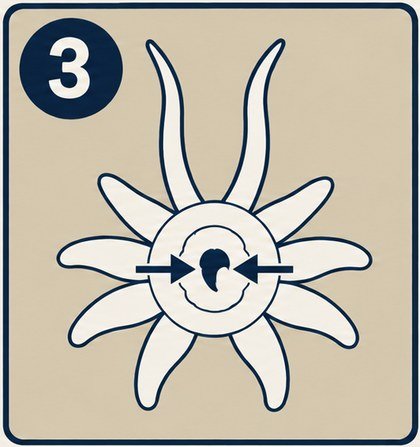
- Pull the membrane off and rinse in cold water

- 1. Slit the mantle and remove the insides and the clear pen
- 2. Cut tentacles in front of the eyes
- 3. Squeeze out the beak
- 4. Pull the membrane off and rinse in cold water
Use a clean work surface and keep the cleaned squid cold. Put waste in the proper disposal place rather than leaving it on a pier or cleaning station.
Pier Etiquette
Give fellow anglers room. WDFW's squid jigging post makes space part of sharing a pier. Ask before moving into a gap, especially if someone's line is angled through it.
Look behind you before casting. Wait when someone is passing close to the rod. Keep multi-jig tackle contained while walking so loose prongs can't catch clothing.
Manage lights with the same care. WDFW suggests bringing a lantern or flashlight to unlit spots, and its post describes lanterns near the surface. Check the owner's policy before setting one there. Keep portable lights secure and avoid shining them into people's eyes.
Rinse ink before it dries. Collect discarded line and packaging, including small pieces from retying.
Pier owners and managers include ports, marinas and cities. Respect their policies and private property, and check posted hours.
You may meet WDFW staff conducting a creel survey, WDFW interviews with anglers about their fishing. The dockside survey post describes surveyors in orange vests and asks anglers to cooperate.
Common Mistakes and Fixes
| Mistake | What You Notice | Fix |
|---|---|---|
| Slack during the lift | Contact disappears | Keep steady upward pressure. |
| Rushing the reel | The retrieve becomes jerky | Slow down and keep pressure even. |
| Staying at the same depth | Nearby presentations differ from yours | Search another depth; squid school. |
| Treating all rigs alike | The tackle is awkward to work | Cast and retrieve the single lure; slowly raise and lower the multi-jig rig. |
| Ignoring the light's reach | Your presentation misses the intended water | Match placement to the lighted area and its dark fringe. |
| Overstrong leader | Leader test exceeds main-line test | Match the main line or go lighter. |
| Assuming lights mean access | Your trip conflicts with a posted policy | Check pier hours and owner policies beforehand. |
| Changing everything together | You can't tell what helped | Compare depth, movement and jig choice separately. |
Tips That Make the Difference
- Keep the outfit sensitive. WDFW's starting advice is light and long, so small changes reach your hand.
- Keep the leader lighter. In WDFW's squid jigging post, the 8 lb leader goes below 10 lb braid or 8–12 lb mono.
- Learn by watching placement. Notice where another angler's line enters the water without crowding their space.
- Use tide as a clue. WDFW favors high water, while its squid jigging post also highlights the flood tide change.
- Carry useful alternatives. A range of jig colors and sizes lets you compare what suits the conditions.
- Prepare spare tackle. Keep it secured and label leader test so a quick change doesn't create a mismatch.
- Bring a towel. Keep your hands and tackle manageable, then rinse ink before it dries.
When It's Slow
Start with the presentation. Retrieve and check for tangles. Make sure the jig hangs freely and that no prong has caught a side line.
Then change depth. Squid school, and WDFW points to depth as a major reason nearby anglers have different results. Keep your sinking count consistent enough to compare attempts.
Next, compare jig color or size. No lure is a constant winner. With a multi-jig arrangement, try changing the order as well.
Look again at your spot by the light. Squid wait in the dark fringe beside bright water, so look again at where your jig sits. Check the tide too: WDFW favors high water, and its squid jigging post points to the flood tide change.
Moving to another listed pier is an option after checking access and rules. Waiting is also a choice, but returns vary by year. A quiet visit doesn't prove that your tackle is wrong.
Safety
Squid jigging happens at night on wet piers. Plan for the dark and the cold before you go.
- Footing: Walk carefully on wet decking, keep the walkway clear and don't lean beyond the rail. Keep children close and watch their hands around tackle. Fish with a friend when you can.
- Light: Bring a camping lantern or large flashlight for an unlit spot. Don't shine it into other people's eyes.
- Cold and rain: Wear warm layers, rain gear and waterproof boots.
- Weather and tide: Check the NWS Seattle forecast office and NOAA tide predictions before you leave.
- Beak and prongs: Handle both with care.
- From a boat: Anchor, bring safety gear and pick another day if the forecast is bad.
- Life jackets: Wear a life jacket that fits. Washington State Parks says to carry a properly fitted U.S. Coast Guard-approved life jacket for each person. Check its life-jacket guidance for the children's and throwable rules.
- Boater education: Check Washington State Parks' boater education rules, especially if you run a motor.
- Cold water: Many Washington waters stay under 60°F most of the year. Cold water shock is a risk even when the air feels warm. Read Washington State Parks' cold-water guidance.
Night Pier Safety Strip

 Lantern or flashlight for unlit piers
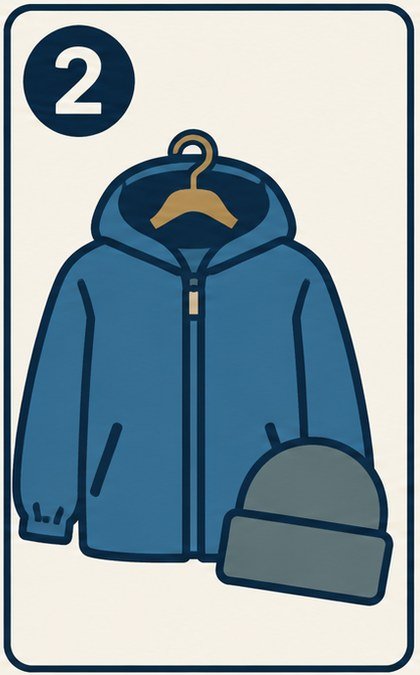 Rain gear and warm layers
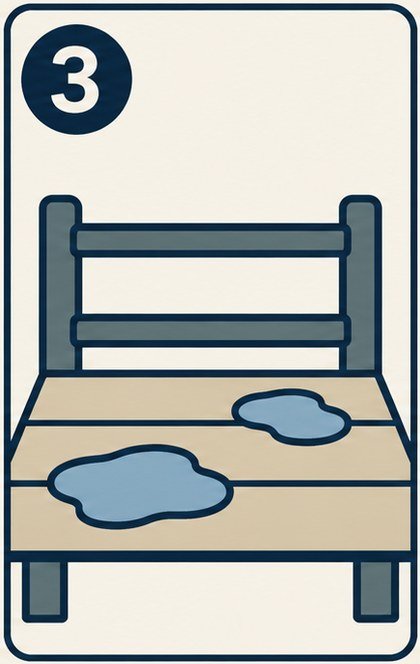 Watch the railing and wet decking
 Check each pier's posted hours
 Beak and prongs: handle with care
- 1. Lantern or flashlight for unlit piers
- 2. Rain gear and warm layers
- 3. Watch the railing and wet decking
- 4. Check each pier's posted hours
- 5. Beak and prongs: handle with care
WDFW Rules to Check
Check the current rules for the exact place, species and tackle arrangement. A rig on this page isn't permission to use it.
- License requirements.
- Daily limits for market squid and Humboldt squid.
- How many lines and lures you may use.
- Legal gear types.
- Container rules.
- Incidental catch such as octopus.
- Marine preserves and conservation areas.
- Pier owners' hours and policies.
Rules change by Marine Area and in season. Check the current WDFW sport fishing regulations and emergency rules before every trip.
Learn More
- WDFW Catching and Cooking Squid — the main how-to for light, tackle, fishing movements and cleaning.
- WDFW Market Squid Species Page — size, schooling and life span.
- WDFW Squid Jigging Post — a rod, line and leader setup, plus tide and comfort advice.
- WDFW Squid Dockside Survey Post — squid background and dockside interviews.
- WDFW Marine Areas — find your fishing zone and its area page.
- NOAA Tides & Currents — tide planning.
- NWS Seattle Forecast Office — forecasts for Puget Sound and the Strait.
- WDFW Sport Fishing Regulations and Emergency Rules — check before every trip.
- Washington State Parks Life Jackets and Cold-Water Safety — before a night afloat.
- Squid, Puget Sound Squid, Jigging and Mooching — related species and methods.
Glossary
- Squid Jig
- Lure with upward-slanting sharp prongs for catching squid.
- Prongs
- Sharp wires arranged around a squid jig.
- Glow Jig
- Jig that gives off light after charging.
- Dropper
- Short side line carrying a jig.
- Light Edge
- Boundary between lighted and dark water.
- Ink
- Dark liquid squid shoot at intruders.
- Beak
- Squid's hard, parrot-like mouth.
- Mantle
- Squid's main body.
- Pen
- Clear internal support inside a squid.
- Market Squid
- Pacific or opalescent squid, the main target here.
- Humboldt Squid
- A different squid found mainly off the coast.
- Flood Tide
- Rising tide.
- Loop Knot
- Knot that leaves a small loop at the lure eye.
- Gang-Tie
- Arrange several jigs on the same rig.
- Slack
- Loose line without tension.
- Braid
- Line woven from fibers.
- Creel Survey
- WDFW interviews with anglers about their fishing.
- Fluorocarbon
- Leader material that is harder for fish to see.
- Leader
- Line between the main line and the jig.
- Marine Area
- WDFW's numbered saltwater fishing zone.
- Mono
- Monofilament, a single strand of fishing line.
- Snap Swivel
- Swivel with a wire clip.
- Spinning Reel
- Reel with a fixed spool that releases line under a bail.
Guides Who Specialize in This
Ask your guide for their WDFW guide license number before you book.
Guided squid trips run from a boat; the pier method on this page needs no guide.
More Saltwater Methods
Explore Jigging, Mooching and Crabbing and Shrimping for other ways to fish salt water.
At a Glance
| Field | Summary |
|---|---|
| Main Species | Market squid. |
| Water | Puget Sound and the Strait of Juan de Fuca by Marine Area, mostly from public piers. |
| Best Times | Timing varies by place. WDFW's squid jigging post calls November through January prime months. Best times are not regulations. |
| In Short | Work luminous or reflective jigs around lighted water after dark. A boat isn't necessary. |
| Skill Level | Beginner; practice finding depth, feeling a take and keeping steady pressure. |
| Key Gear | Light, long rod; WDFW's post gives a 6–9 ft trout spinning outfit. Use 10 lb braid or 8–12 lb mono with 3–4 ft of 8 lb fluorocarbon. Weighted luminous jigs are 3/8–1/2 oz in that post; unweighted jigs use a 1 oz weight. |
| Leader Check | Same test as the main line or lighter. With 6 lb main line, use 6 lb leader or lighter. |
| Light and Comfort | Lantern or large flashlight for unlit spots; rain gear and warm layers. |
| Main Skill | Set on a slight change, then maintain steady upward pressure without slack. |
On This Page
- What It Is and When It Beats Other Methods
- Target Species and Where in Washington
- Pier by Marine Area
- Seasons and Conditions
- Rods, Reels, Line and Leader
- Jig Types and Colors
- Terminal Tackle and Rigging, Step by Step
- Technique, Step by Step
- Worked Examples
- Reading the Light and Finding Squid
- A Night on the Pier, Step by Step
- The Set, Landing and Ink
- Storing and Cleaning
- Pier Etiquette
- Common Mistakes and Fixes
- Tips That Make the Difference
- When It's Slow
- Safety
- WDFW Rules to Check
- Learn More
- Glossary
- Guides Who Specialize in This
- More Saltwater Methods