

Side Drifting
How to side drift for steelhead from a drift boat or sled: the rig, the boat control, the bite and the small adjustments that decide your day.
How to side drift for steelhead from a drift boat or sled: the rig, the boat control, the bite and the small adjustments that decide your day.
A drift boat is a river boat controlled with oars. A jet sled is a powered river fishing boat. Either can carry the same light rigs downstream while the operator keeps pace with the bait near the bottom. Water near the bottom moves slower than the surface current.
Everyone has a job. The operator controls the boat and calls the casts. Anglers keep their rigs matched, watch their rod tips and keep their lines parallel. The aim is a natural drift through useful water, with enough control to notice when something changes.
What Side Drifting Is and When It Beats Other Methods
Side drifting takes a drift-fishing rig along with a moving boat. From a fixed position, the rig eventually swings out of the water you want to cover. Moving with it keeps the bait fishing through a longer stretch.
Why It Works
The boat follows the weight and bait near the riverbed. If the boat gets ahead of the bait or falls behind it, the line angle shows it. Placement and travel speed matter more than a favorite bait color.
It helps when:
- You need to search. Moving downstream covers holding water instead of working the same small patch.
- A river is dropping and turning dirty green. Side drifting can become an option as the water settles.
- You can hold a consistent drift. Matched tackle lets the operator manage the baits together.
- The bottom allows light contact. You want the weight tapping now and then, not dragging through every rock.
A leader is the length of line between the swivel and the hook. Low, clear water calls for smaller baits, longer leaders and careful boat placement. Keeping the boat off the fish matters even when the cast itself looks right.
When side drifting stops working, try another method. Float Fishing and Pulling Plugs show the fish something different. Very high, muddy water may call for waiting rather than another lure. No boat? Fish the same rig from the bank with Drift Fishing.
Target Species and Where in Washington
Winter steelhead are the main target. See Steelhead for the fish itself. This page covers steelhead only; salmon methods are on other pages.
Where It Works in Washington
This page covers the Bogachiel, Sol Duc, Calawah, Hoh, Skykomish, Cowlitz, Kalama and Lewis. On the four north coast rivers, WDFW interviews boat anglers. WDFW doesn't record which method they used. On the other four, WDFW lists boat ramps and other access sites.
A ramp listing doesn't mean you may fish from a boat there. Check the stretch, the access and the current WDFW rules. For broader north coast context, see Olympic Peninsula Winter Steelhead.
River by River
Best Times, Not Regulations. WDFW's creel surveys interview anglers about their fishing. In its north coast creel tables, anglers keep hatchery steelhead mostly in December and January. They release wild steelhead mostly from February through April. These are patterns, not season dates.
A hydrograph shows a river measurement changing over time. Discharge means flow; gage height means water level. Turbidity means cloudiness. Use the rise, peak and drop together with what you see at the river. A peak doesn't mean it's safe to launch. No single number makes any of these rivers good.
Per-River Access Map
- WDFW water access site
- Walk-in bank access
- USGS gauge
Forks rivers

- 1. Wilson (Bogachiel): concrete boat ramp
- 2. USGS 12042800 Bogachiel gauge
- 3. USGS 12043000 Calawah gaugeCalawah: no WDFW access site confirmed; see WDFW's water access map
- 4. Salmon Hatchery (Sol Duc): concrete ramp with ADA loading platformSol Duc: no gauge
- 5. USGS 12041200 Hoh gaugeHoh: no WDFW access site confirmed; see WDFW's water access map
Dashed line: Olympic National Park boundary; park rules apply upstream.
Skykomish River

- 6. Lewis Street (Monroe): boat ramp
- 7. Simmons (Clay Banks Hole): bank access by trail, about 1/3 mile; no onsite parking; not a boat launch
- 8. Big Eddy: hand launch, Washington State Parks
- 9. USGS 12134500 Skykomish near Gold Bar gauge
Cowlitz, Kalama and Lewis rivers

- 10. Barrier Dam
- 11. Blue Creek
- 12. Massey Bar
- 13. Toledo
- 14. I-5 Bridge
- 15. Wallace Bar
- 16. USGS 14243000 Cowlitz at Castle Rock gauge: regulated
- 22. Cedar Creek: concrete ramp
- 23. Island: concrete ramp (PacifiCorp)
- 24. Pekin Ferry: concrete ramp
- 25. USGS 14220500 Lewis gauge: regulated
10–15: launch type: check WDFW. Frame: Kalama close-up.
Kalama close-up

- 17. Prichard: hand launch
- 18. Hand: concrete ramp
- 19. Modrow Bridge: concrete ramp
- 20. Fisherman's Loop: concrete ramp
- 21. Sportsman's Club: unimproved ramp at the mouth
Kalama: no gauge.
Confirm each site's access type on WDFW's site page before towing a boat.
Rivers and gauges: USGS · Access sites: Washington Department of Fish and Wildlife (WDFW) · Park boundary: NPS
Simplified drawing. River data from USGS; access sites from WDFW. Not the legal boundary; WDFW rules govern. Not endorsed by WDFW.
Bogachiel
WDFW interviews boat anglers on the Bogachiel and Quillayute during its winter steelhead surveys. WDFW doesn't record which method they used.
Wilson has a concrete boat ramp. Confirm the launch type and current site information on WDFW's page before towing a boat.
Read USGS 12042800 for the river trend. A fast, muddy rise can interrupt fish movement. At the peak, keep checking color; a flat line on the graph isn't a signal to launch. A dropping river that is clearing is the time to look at a drift. Compare the gauge with what you see at the water.
Rules change by river and in season. Check the current WDFW sport fishing regulations and emergency rules before every trip.
Sol Duc
WDFW interviewed boat anglers on the Sol Duc during its north coast winter-steelhead surveys. WDFW doesn't record which method they used.
Salmon Hatchery has a concrete ramp with an ADA loading platform. Confirm the launch type on WDFW's site page before towing.
There is no active USGS gauge for the Sol Duc. Use local observations and the NOAA Northwest River Forecast Center for broader weather and river-trend planning. Don't borrow another river's reading. Watch for a rise, a muddy peak and then a clearing drop. Look again as the water drops.
Rules change by river and in season. Check the current WDFW sport fishing regulations and emergency rules before every trip.
Calawah
WDFW's north coast winter-steelhead surveys include interviews with Calawah boat anglers. WDFW doesn't record which method they used.
Find public access on the WDFW water access map. Confirm the site's launch type before towing. Some sites are hand launch or walk-in only.
Check USGS 12043000. A rapid rise with worsening color calls for caution. At the peak, check whether debris and muddy water are still coming down. A dropping, clearing river is the time to look again.
Rules change by river and in season. Check the current WDFW sport fishing regulations and emergency rules before every trip.
Hoh
WDFW interviewed boat anglers on the lower and upper Hoh during winter-steelhead surveys. WDFW doesn't record which method they used. Olympic National Park rules apply above the park boundary; check those requirements separately.
Find public access on the WDFW water access map. Confirm the site's launch type before towing.
Use USGS 12041200 to follow the trend. During a muddy rise, fish movement can slow or pause. At the peak, check debris, current and color. Falling, clearing water may let you fish a controlled drift again. Check the downstream route before committing to a float.
Rules change by river and in season. Check the current WDFW sport fishing regulations and emergency rules before every trip.
Skykomish
WDFW lists three different kinds of access here. Lewis Street in Monroe has a boat ramp at the SR 203 bridge. Big Eddy, east of Gold Bar beside the US 2 bridge, is a hand launch managed by Washington State Parks. Simmons, also called Clay Banks Hole, has a trail of about 1/3 mile to the river near Gold Bar. It has no onsite parking, so treat it as bank access, not a boat launch. Confirm each site's access type on WDFW's site page before towing a boat.
Read USGS 12134500 near Gold Bar. A fast muddy rise, a peak and a clearing drop are different conditions. Fish tend to move again as the water drops, but the gauge can't promise a bite.
Rules change by river and in season. Check the current WDFW sport fishing regulations and emergency rules before every trip.
Cowlitz
WDFW reports list Cowlitz bank anglers with steelhead in late February. Those are bank anglers, not boat catches.
WDFW access sites on the Cowlitz include Barrier Dam, Blue Creek, Massey Bar, Toledo, I-5 Bridge and Wallace Bar. Check each site's WDFW page for the launch type before towing a boat.
USGS 14243000 at Castle Rock is marked "Regulated", meaning dams upstream affect the flow. Follow the gauge trend, not just the rainfall. A fast muddy rise can interrupt movement. At the peak, look again; don't assume the river has recovered. When it drops to dirty green, shorter presentations into slower water near shore become an option.
Rules change by river and in season. Check the current WDFW sport fishing regulations and emergency rules before every trip.
Kalama
WDFW reports list Kalama bank anglers with steelhead in late February. Those are bank anglers, not boat catches.
Modrow Bridge, Hand and Fisherman's Loop have concrete ramps. Sportsman's Club at the mouth has an unimproved ramp. Prichard is a hand launch. Confirm the launch type and site information before towing.
There is no live USGS gauge for the Kalama. After a major storm, allow conditions to settle and judge color at the river. Watch the river rise, peak and drop by eye; don't borrow another river's number. A muddy rise can stop fish moving. A clearing drop is the time to look again. In low clear water, look toward deeper slots and the tops of holes. The top of a hole is its upper end, where faster water drops into a deeper pool.
Rules change by river and in season. Check the current WDFW sport fishing regulations and emergency rules before every trip.
Lewis
WDFW lists concrete ramps at Cedar Creek, Island and Pekin Ferry. Confirm the launch type and current site information before towing.
Check USGS 14220500, also marked "Regulated" because dams affect the flow. Use its recent trend alongside the color and current you observe. During a rapid muddy rise, movement can slow. A peak is a time to look again, not a sign that the water is safe. On a clearing drop, inspect slower bank-side water before choosing a drift. Keep notes so later visits have a useful comparison.
Rules change by river and in season. Check the current WDFW sport fishing regulations and emergency rules before every trip.
Seasons and Conditions
Best Times, Not Regulations. On the north coast, hatchery steelhead come early (December and January) and wild steelhead later (February through April). WDFW's Cowlitz and Kalama reports list bank anglers with steelhead in late February. Neither tells you whether a stretch is open or safe for a boat.
Look at the river before choosing the presentation. Check the gauge trend where available, the NOAA river forecast and conditions at the launch. A river can change while you travel.
Reading the Water: Flow, Color and Temperature
Flow: Studies on the Snake and Columbia rivers found that fish slow or stop moving during fast rises and move again as flows drop. That's why the direction of change matters. A falling graph still isn't a bite forecast.
Water near the bottom moves differently from the surface current carrying the boat. Once you launch, line angle tells you whether the operator is keeping pace with the rig.
Flow-Gauge Reading Chart

- 1. Rising: a fast rise tends to stop movement
- 2. Peak
- 3. Dropping: movement can pick up as flows drop
Snake and Columbia study patterns describe migration, not a bite forecast.
Color: Fish move more slowly through turbid water, and very muddy conditions can nearly stop migration. Dirty green means the water still has color but is clearing enough to fish. Side drifting can start as high water drops toward that condition.
In high, colored water, inspect the slower lanes near shore. Use a shorter leader, a bigger egg cluster and an attractor, a bright buoyant lure such as a Spin-N-Glo or Corky that helps fish find the bait. As the water clears, go to smaller baits and longer leaders.
Water-Color Scale

- 1. Muddy: very muddy water nearly stops migration
- 2. Dirty green: side drifting can start; shorter leader, larger bait
- 3. Clearing
- 4. Low clear: smaller bait, longer leader
Temperature: Where a gauge shows water temperature, note it along with flow and color. No temperature number makes fishing good or bad. Cold water also chills you fast when you sit still in a boat, so dress in layers.
Light: In bright, clear water, keep the boat from crossing the fish you hope to reach. A careful approach matters more than a long cast.
Rods, Reels, Line and Leader
Use a spinning reel, the kind that hangs under the rod and holds line on a fixed spool. Its bail is the wire arm you open to cast and close to retrieve. The reel's drag lets line leave under pressure during a fight. A smooth drag matters more than extra features.
The rod should cast light weights and bend easily enough that a fish can hold the bait before feeling strong resistance. Moderate or slow action means the bend extends farther down the rod under load.
Mono, or monofilament, is single-strand line. High-visibility, or hi-vis, line is brightly colored so you can track it. Pencil lead is lead wire cut into drift weights. A slinky is a flexible weight filled with shot.
| Gear | Starting Point | Why It Helps |
|---|---|---|
| Rod | Long, light spinning rod, often 9–9½ ft, with moderate or slow action. | Casts light rigs and cushions the pickup. |
| Reel | Spinning reel with a smooth drag. | Handles the light presentation and releases line smoothly. |
| Main Line | 10 lb high-visibility mono. | Bright line makes the drift angle easier to see. |
| Leader | Measure about 4–5 ft before tying; lengthen in clear water. | Separates the hook from the weight and gives room to adjust. |
| Hook | Size 4 through size 1, matched to the bait and rig example. | Leaves the hook gap clear instead of burying it in bait. |
| Weight | Pencil lead cut to suit the drift; slinkies are another option. | Adjusts bottom contact as depth and current change. |
Fluorocarbon is a leader material that is harder for fish to see. Use a leader the same test as your main line or lighter. Then the leader breaks first and you keep the rest of the rig. With a 10 lb main line, that means a 10 lb leader or lighter. Check the whole outfit, its knots and the rod's rating together.
Match the whole outfit across the boat: rod, reel, line, leader, swivel, weight, hook and bait. If only the weights match, the other differences still change the drift.
Starter Kit vs Upgrade Path
Starter Kit
- Choose a long, light spinning rod with a soft action and a smooth-drag spinning reel.
- Use 10 lb hi-vis mono, such as Izorline XXX Super Co-Polymer Hi-Vis Yellow, to make line angles visible.
- Add size 7 snap swivels, small swivels with a clip for the weight. Add pencil lead.
- Use size 4 Gamakatsu Octopus Hooks for yarnies, small trimmed balls of yarn used as bait.
- Use Seaguar STS Trout & Steelhead for the fluorocarbon leader. It's made in 4–17 lb. Pick a test no heavier than your main line.
- Give everyone the same setup.
Upgrade Path
- Add an identical spare rod so a break-off does not stop the next drift.
- Cure roe (salmon eggs) with Pautzke Fire Cure in Red, Pink or Orange.
- Add a Yakima Bait Lil' Corky as the drift bobber in the roe rig. A drift bobber is a buoyant lure that helps hold the hook above the rocks.
- Consider a Yakima Bait Spin-N-Glo attractor for high, colored water.
Terminal Tackle and Rigging, Step by Step
Side-Drift Rig
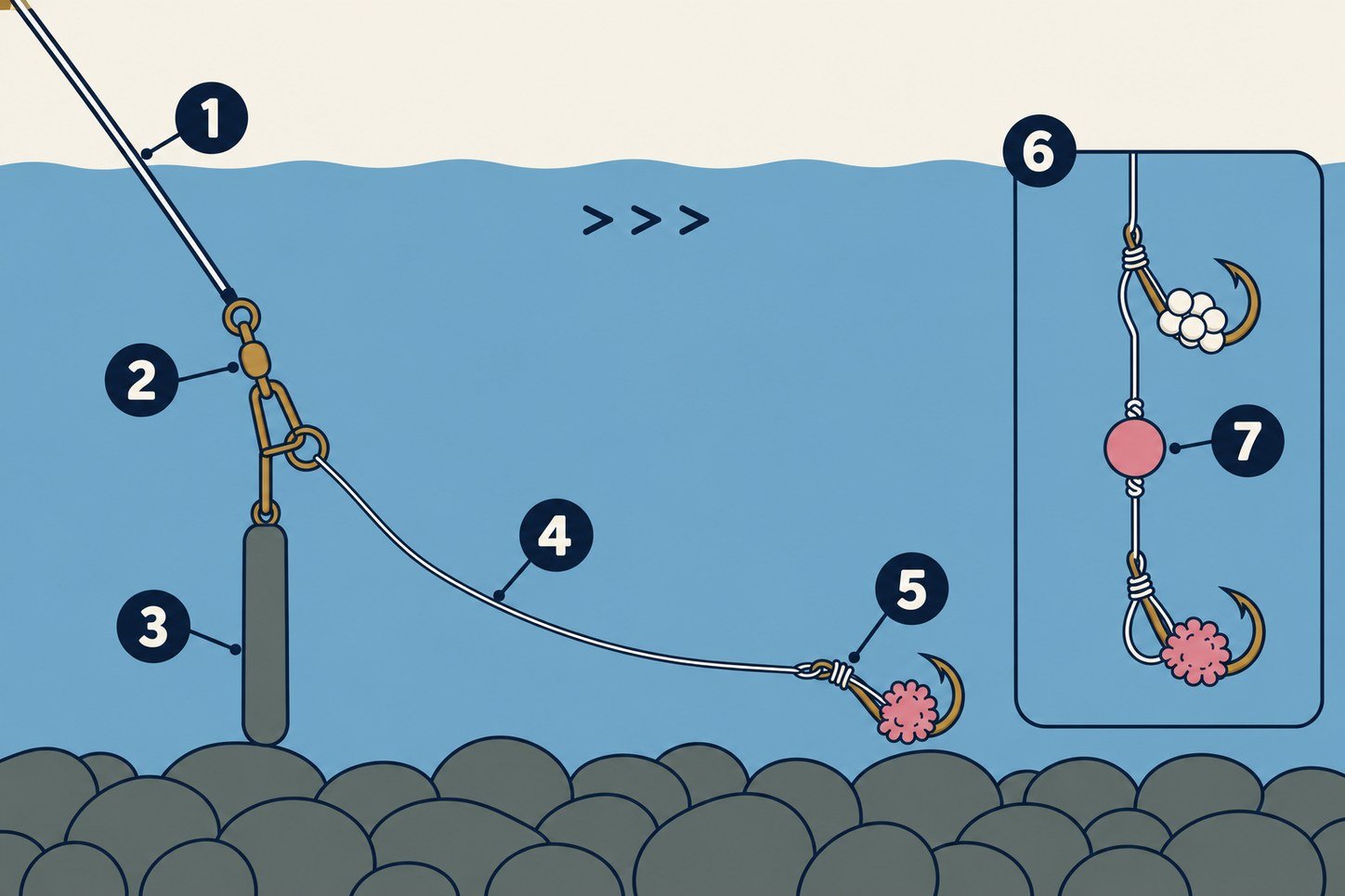
- 1. Main line: 10 lb hi-vis mono
- 2. Improved clinch knot to a size 7 snap swivel
- 3. Pencil lead on the snap
- 4. Leader: about 4–5 ft, the same test as the main line or lighter
- 5. Yarnie: size 4 octopus hook with an egg loop
- 6. Roe rig: two size 4 octopus hooks about 1 in apart with egg loops; roe in the top loop
- 7. Drift bobber between the hooks
This rig puts the leader on the ring end of the snap swivel. The pencil lead hangs from the clip. Prepare leaders before the trip and keep them organized so everyone can replace like with like.
Check WDFW's current hook, bait and tackle rules for the exact stretch before you choose a hook setup. These are rigging examples, not a statement of what a river allows.
How It Works, Step by Step
- Connect the main line. Tie it to a size 7 snap swivel with an improved clinch knot, the same knot shown step by step on Drift Fishing. Wet the knot, tighten it steadily and check that it holds.
- Prepare the leader. Start with about 4–5 ft before tying. That is longer than the bank rig on Drift Fishing; follow the rig for the method you're fishing. Tie its upper end to the swivel's ring end, leaving the snap for the weight.
- Build the yarnie option. Tie a size 4 octopus hook with an egg loop, a hook knot that leaves a loop to hold yarn or bait. A size 4 Gamakatsu Octopus Hook matches this example. Secure the yarn without covering the hook point.
- Or build the roe option. Tie two size 4 octopus hooks about 1 in apart, each with an egg loop. A drift bobber sits between them, with a dime-size piece of roe held in the upper loop. Match the bobber to the hook gap; a small Lil' Corky adds buoyancy.
- Fit the weight. Cut pencil lead to suit the current and clip it to the snap. One how-to writer uses 3/16 in diameter as an everyday size. Carry different lengths so you can adjust rather than force the same weight through every run.
- Check the whole rig. Straighten the leader, inspect the hook point and compare the setup with the other rods. Match the bait size as well as the tackle.
Egg-Loop Knot Steps

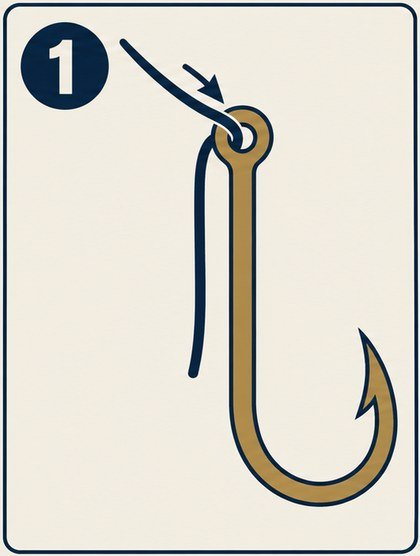 Leader in through the eye (arrow)
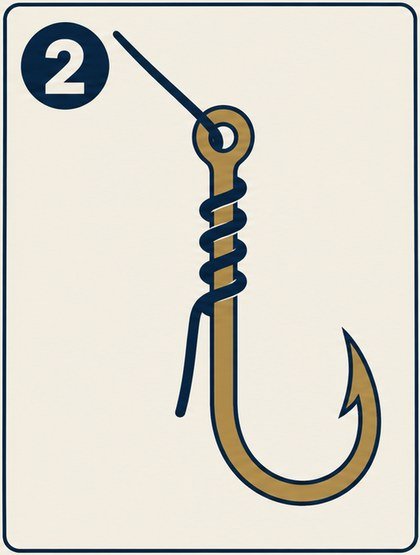 Wraps along the shank
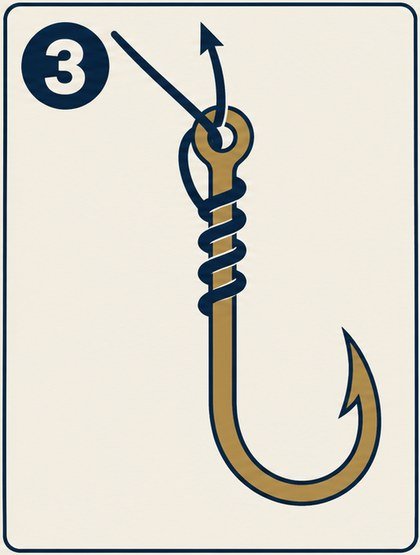 Line out through the eye (arrow)
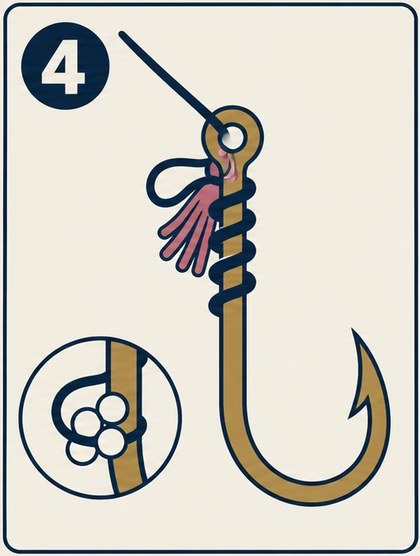 Pull to open the loop: it holds yarn or roe against the shank
- 1. Leader in through the eye (arrow)
- 2. Wraps along the shank
- 3. Line out through the eye (arrow)
- 4. Pull to open the loop: it holds yarn or roe against the shank
Wraps: follow the leader maker.
Side drifters use cured eggs, yarn balls, beads, soft egg clusters, rags and pink worms. Rags are soft, stringy attractors tied near the hook. Yakima Bait adds dyed prawns, plus a small Lil' Corky or Spin-N-Glo to float the bait just off the bottom. Start with a rig everyone can fish consistently before adding variations.
Pautzke Fire Cure is an egg cure for preparing roe. Pautzke says natural-colored baits are more common for side drifting than for plunking.
A sliding sinker, a weight that slides on the main line above the swivel, also works. Whatever you choose, use the same rig on every rod.
By Species
Winter Steelhead
Winter steelhead are the core target for this rig and boat-control approach. Keep the starting outfit light enough to cast and sensitive enough to show the tip bending under a fish's pull. A yarnie on a size 4 hook is a straightforward option; roe provides another.
In clear water, reduce bait size and lengthen the leader. In high, dirty-green water, use a shorter leader and a larger egg cluster with an attractor. Location changes too: slower bank-side lanes matter in high water, while low clear water draws attention to deeper slots and the tops of holes.
Summer Steelhead
Some western Washington rivers have summer steelhead runs. This page doesn't cover side drifting for them. The advice here is for winter fish.
Technique, Step by Step
Overhead Boat and Lines
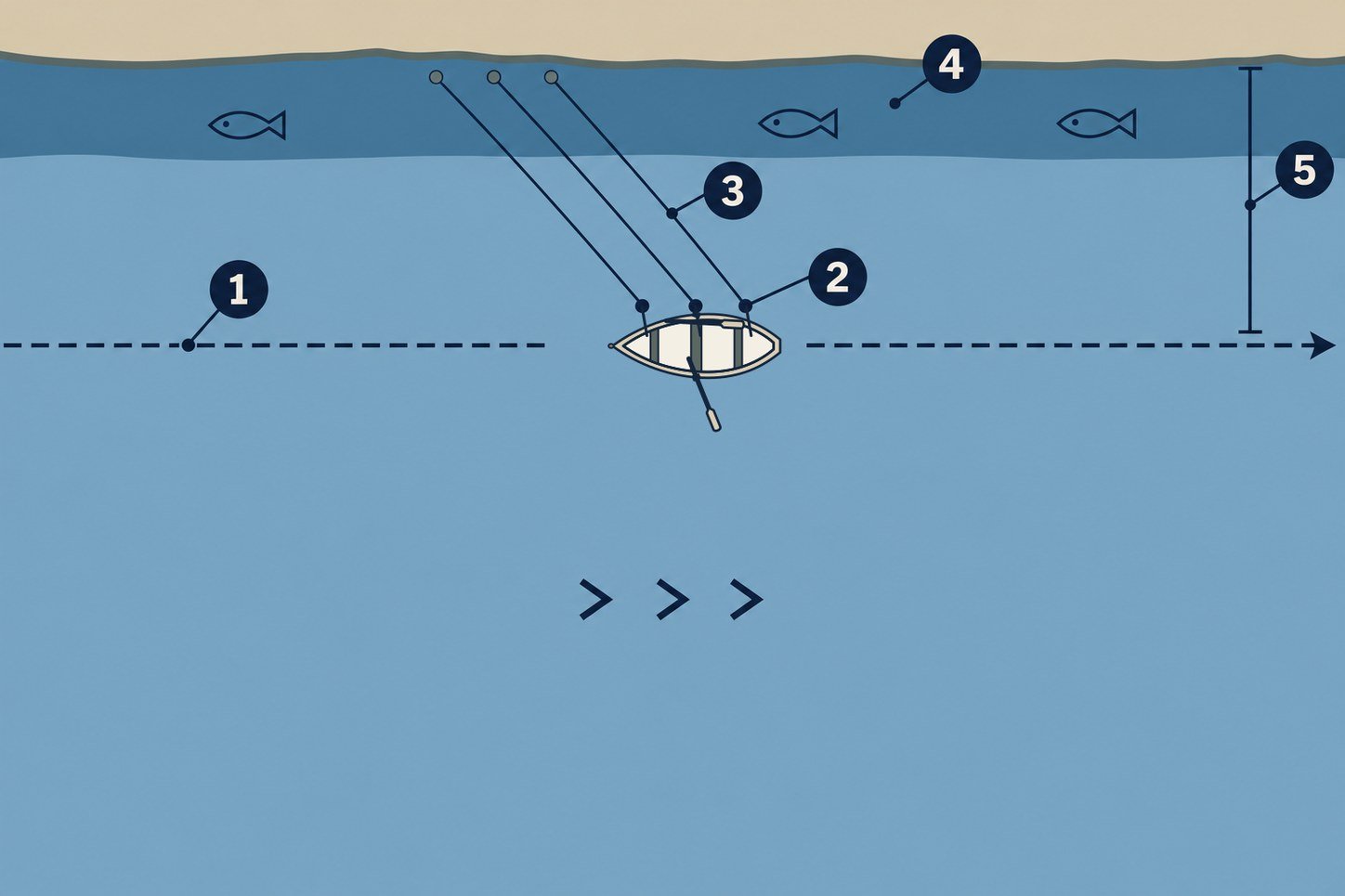
- 1. Boat path: hold the same distance off the bank
- 2. Anglers on one side
- 3. Cast about 45 degrees upstream toward the bank; lines parallel
- 4. Fish lane: the boat never runs over the fish
- 5. Steady gap
The operator calls the casts.
How It Works, Step by Step
- Start at the head of the water. Position the boat above the stretch you intend to fish. Choose the bait lane while keeping the boat from passing over the fish.
- Agree on the cast. The operator identifies the target and calls the casts. Cast toward the bank at roughly 45 degrees upstream, adjusting the target to the seam or structure. A seam is the boundary between faster and slower current. Keep lines parallel. The operator sets the order; there is no fixed front-to-back casting order.
- Close the bail and recover slack. Do this promptly after the rig lands so the weight does not settle into a snag on loose line. Don't pull the bait out of its lane as you do it.
- Watch the rod and feel bottom. Hold the rod about 10 o'clock, with your body and rod facing along the line. The weight should tick bottom now and then as it moves. Constant dragging calls for less weight; no contact calls for more. Learn the feel; don't count taps.
- Read the line angle. A slow swing toward an upstream angle means the speed is right. A fast upstream swing means the boat is going too fast. A line that holds still or moves downstream means the boat is too slow.
- Finish or reset. Let a well-positioned rig complete its path. Reel in when it falls out of position. In pocket water, the small pools between rocks, reel in before the rig reaches the rocky end. If you break off, pick up another rigged rod.
Technique Step Sequence


- 1. Start at the head of the run
- 2. Wait for the operator's cast call
- 3. Cast and close the bail
- 4. Find light bottom contact
- 5. Check the line angle
- 6. Reel in before the rig leaves the lane
The Tick

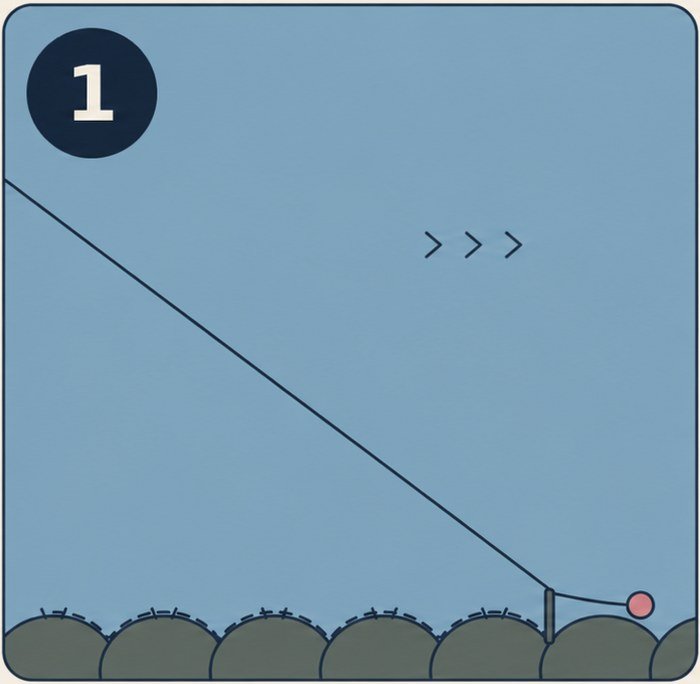 Dragging: too heavy
 Hardly or never touching: too light
 Ticks bottom now and then while moving: right
- 1. Dragging: too heavy
- 2. Hardly or never touching: too light
- 3. Ticks bottom now and then while moving: right
Learn the feel; don't count taps.
Boat Control
The operator manages speed and distance from shore together. Drifting at the right speed does little good if sideways movement pulls the baits out of the lane.
With oars: Hold the drift boat back so the current carries it with the weight and bait. The operator needs to see each rod tip; anglers should hold their rods where asked.
With a kicker: A kicker is the small outboard used to control the sled's drift. Keep the bow pointed upstream, with the kicker in forward gear at low throttle. The goal is to follow the bait near the bottom rather than simply ride the faster surface.
Boat Speed Matches the Bait

- 1. Surface current: faster
- 2. Water near the bottom: slower
- 3. Keep pace with the bait near the bottom, not the surface
- 4. The rig drifts naturally
Drift boat: the oars hold the boat back. Jet sled: bow upstream, motor in gear at low throttle.
For that bow-upstream setup, more forward throttle holds the boat back when the lines swing upstream too quickly. Easing off lets it slip downstream when the line angle is fixed or moving downstream. You can also take the motor out of gear or reverse briefly. Make those calls with room to spare and an eye on what's downstream.
Line-Angle Speed Check

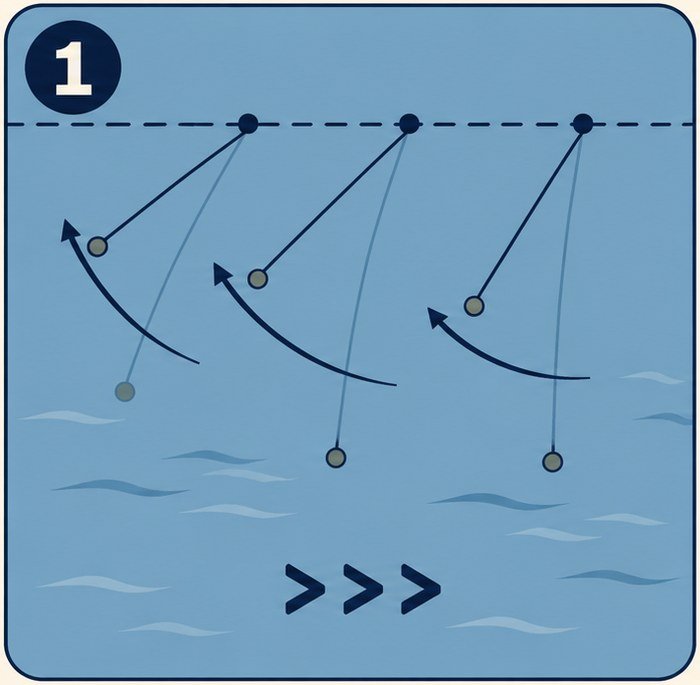 Lines swinging upstream fast: boat too fast
 Lines slowly swinging upstream: right
 Lines straight or downstream: boat too slow
- 1. Lines swinging upstream fast: boat too fast
- 2. Lines slowly swinging upstream: right
- 3. Lines straight or downstream: boat too slow
Hi-vis line makes the angle easy to read.
Hold a steady distance from shore and look ahead before structure pushes the boat sideways. Staying near a bank-side lane does not mean running over it. If you are learning to operate the boat, concentrate on boat control while others fish.
Let a drift finish its path. Then row or motor back up and run it again with the baits in a new lane. Fast water may allow only one pass. If boats ahead fished the middle, try another lane, such as the far side of the seam.
Reading the Water
Look for useful current rather than an empty space to cast into:
- Deeper seams: Current edges beside deeper water, including willow lines, rows of willow bushes along the bank.
- Riffle edges: The outside seam and lower outside edge can be worth fishing when the center is quiet. A riffle is shallow water with a broken surface.
- Pocket water: Small holding areas between rocks demand accurate casts and weight control. Agree on short and long casts first; the operator may call everyone to cast together.
- Creek-mouth fans: Rock and debris below an entering creek form a fan. Fish can hold above and below it, including deeper water farther down. Lighten the weight and use a smaller presentation near shore.
- High-water edges: Look toward slower water near the bank as high water drops and turns dirty green.
- Low-water slots: In clear, low water, inspect deeper slots, centers and the tops of holes.
Yakima Bait suggests water about 6–18 ft deep for winter side drifting. Drift-fishing guidance calls 4–8 ft at walking speed textbook steelhead water. Neither is a rule. Read the current and the bottom contact where your rig travels.
Where to Run the Baits

- 1. Riffle seams
- 2. Outside seam: the lower outside edge of a riffle can hold fish when the center doesn't
- 3. Willow line: a row of willow bushes along deeper water
- 4. Pocket water: exact weight and exact casts; often one shot
- 5. Creek-mouth fan: fish hold above and below it
- 6. Deeper water near the fan
Worked Examples
These describe choices and steps, not catch reports. Launch decisions come before fishing decisions. A rod tip loads when it bends under a sustained pull.
A January Float on the Bogachiel
Plan for the early hatchery steelhead on the north coast. Check the trend and turbidity at USGS 12042800, then compare the river's color on arrival. Confirm Wilson's site information before towing.
Start fishing at the head of the water, with the boat clear of the intended bait lane. Everyone uses matching outfits. On the operator's call, cast roughly 45 degrees upstream toward the bank and close the bail promptly.
Watch the lines slowly work toward an upstream angle while the weight taps bottom. If the tip loads, lift to set; everyone else reels in and clears their rods. Without a hookup, finish the drift before considering another lane.
Rules change by river and in season. Check the current WDFW sport fishing regulations and emergency rules before every trip.
High, Dropping Water on the Cowlitz
Check the Castle Rock gauge, USGS 14243000, and confirm the river is dropping toward dirty green. Confirm the chosen access site's launch type before towing.
Start at the head of the water. Put the baits into the slower lane near shore because high, colored water shifts attention toward those softer edges. Keep the boat from crossing the fish while making short casts.
Shorten the leaders and use a nickel-size egg cluster with a Lil' Corky or Spin-N-Glo attractor. A little more weight can slow the presentation in this water, but check for tapping rather than continuous dragging.
If the tip loads, lift to set and have everyone else reel in. The operator keeps control of the boat while the angler maintains tension.
High-Water Adjustment Card

- 1. River dropping and dirty green: side drifting can start
- 2. Close to shore, short casts
- 3. Shorter leader
- 4. An attractor such as a Corky or Spin-N-Glo
- 5. A larger cluster, about nickel- to quarter-size
- 6. A bit more weight to slow the drift
Rules change by river and in season. Check the current WDFW sport fishing regulations and emergency rules before every trip.
Low, Clear Water on the Kalama
The Kalama has no live gauge, so judge color at the river. After a major storm, allow conditions to settle. Confirm the launch information for Modrow Bridge, Hand or Fisherman's Loop before towing.
Start at the head of the water, keeping the boat off the fish. Direct the baits toward a deeper slot or the top of a hole because fish hold there in low, clear water.
Lengthen the leader and use a small egg cluster or a yarnie on a size 4 hook. For a small egg cluster, a size 2 or size 1 hook works. Match everyone's setup and follow the cast call.
If the tip loads, lift to set while everyone else clears their lines. Avoid dragging an out-of-position bait across the lane; reel in and reset.
Rules change by river and in season. Check the current WDFW sport fishing regulations and emergency rules before every trip.
The Bite, Hook Set, Fight and Landing
Many bites are seen before they are felt. The bait stops while the boat continues, and the rod tip loads. Watch for that change instead of yanking at every bottom tap.
When the tip loads, lift quickly to set. Treat a pause as a possible fish until you can tell otherwise. There is no fixed waiting count for this rig.
Call out the hookup. Everyone else reels in and stows their rods. In a powered boat, the operator takes the motor out of gear to keep line away from the propeller. Maintain tension and let the drag work. If the fish goes under the hull, lower the rod tip into the water to keep the line clear. Lead the fish head-first toward the net without lifting it on the line.
For a snag, point the rod directly along the line and hold the spool while the moving boat breaks the line. Keep the rod unloaded. For an above-water snag, everyone turns away because the hook and lead can fly back.
Bite or Snag

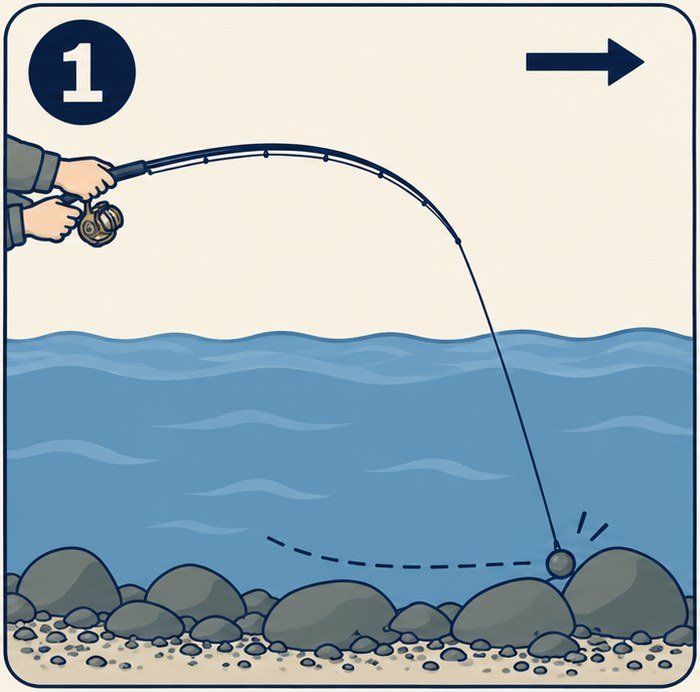 The bait stops, the boat keeps moving and the rod tip loads
 Lift quickly to set
 Snag: point the rod at it, hold the spool and let the boat break it off
- 1. The bait stops, the boat keeps moving and the rod tip loads
- 2. Lift quickly to set
- 3. Snag: point the rod at it, hold the spool and let the boat break it off
Handling and Release
Plan the landing before the fish reaches the boat. Have the net and release tools ready so nobody has to search while holding a fish.
- Use a soft, knotless net or release the fish beside the boat.
- Wet your hands and keep a fish intended for release in the water.
- Support its body without squeezing the belly or touching the gills.
- Cut the leader when removing a deeply embedded hook would cause more damage.
- Hold the fish upright in gentle current and let it swim away under its own power.
These are handling practices. Read WDFW's current retention and fish-handling requirements for the exact area, including whether released steelhead may be lifted from the water. Don't guess them from a rig or a photo.
Common Mistakes and Fixes
| Mistake | What You Notice | Fix |
|---|---|---|
| Too much weight | Constant dragging | Reduce weight until contact becomes occasional. |
| Too little weight | No bottom contact | Add weight and try again. |
| Slack after the cast | Snags or crossed lines | Close the bail and recover slack promptly. |
| Mismatched outfits | A line keeps leaving the group | Match the whole outfit, including bait. |
| Boat moving sideways | Baits leave their lane | Hold a steady distance from shore. |
| Poor rod position | Hard-to-see bites | Face along the line and keep the tip visible. |
| Fishing the same lane repeatedly | Water remains untested | Place the next pass in a different lane. |
| Damaged hook or leader | Weak points after a snag | Inspect and replace damaged tackle. |
Tips That Make the Difference
- Prepare matching spares. Keep an identical rod ready to replace a broken-off rig.
- Adjust size to clarity. Smaller baits fit clearer water; larger clusters suit high, dirty-green water.
- Prepare bait and leaders ahead. Spend the drift watching the rod rather than rebuilding tackle.
- Look beyond the middle. Try another seam or overlooked water below a creek-mouth fan.
- Keep useful notes. Record the gauge trend, color, presentation and lane. Compare similar conditions on later trips.
When It's Slow
Check placement first. A new lane may matter more than a new bait color. Then check bottom contact and line angle before adding weight or changing the offering.
If the river has cleared, reduce bait size and consider a longer leader. If it is high and dropping toward dirty green, look at the softer water near the bank. Change the presentation to fit what you see instead of making several changes at once.
A float and jig, pulled plug or swung fly remains another choice. Unsafe water calls for a changed plan or a wait.
Safety
Wear a life jacket. Washington State Parks says vessels must carry a properly fitted U.S. Coast Guard-approved life jacket for each person. Check its life-jacket guidance for children's wear requirements and throwable-device rules. Wear yours so it can support you through cold-water shock.
Understand cold water. Washington State Parks describes cold-water shock, with gasping and breathing trouble, followed by loss of swimming ability and later hypothermia. Its cold-water safety guidance uses the 1-10-1 memory aid: about 1 minute to control breathing, about 10 minutes of useful movement and about an hour before hypothermia can take consciousness. These are rough reminders, not promises. Cold water shock can drown you in the first minutes, so wear the life jacket.
Cold Water 1-10-1

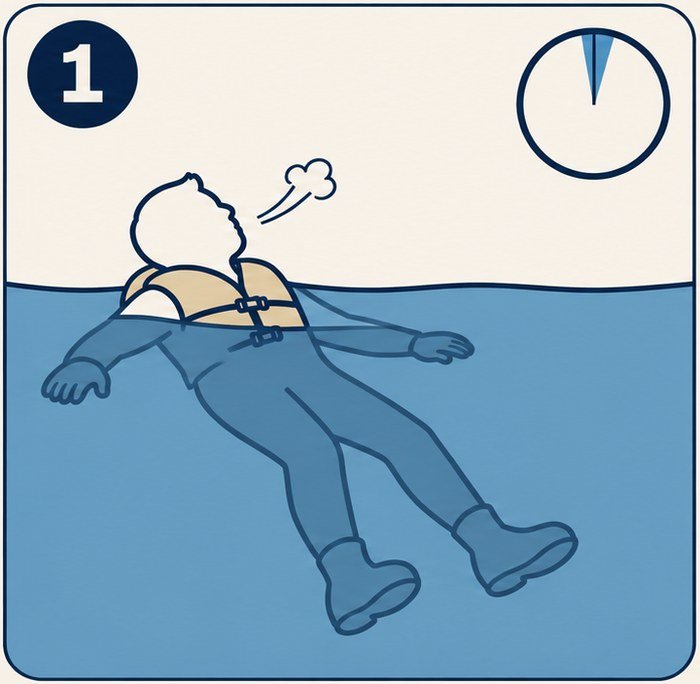 About 1 minute: control your breathing
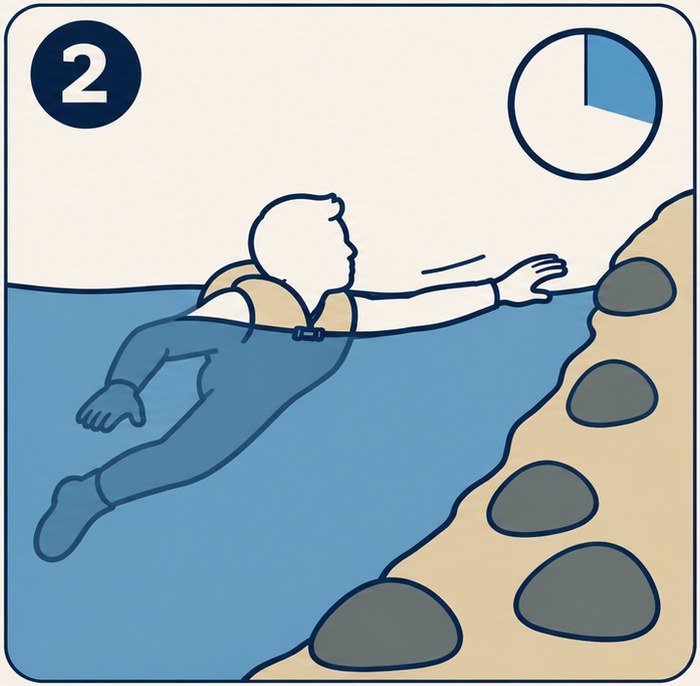 About 10 minutes of useful movement
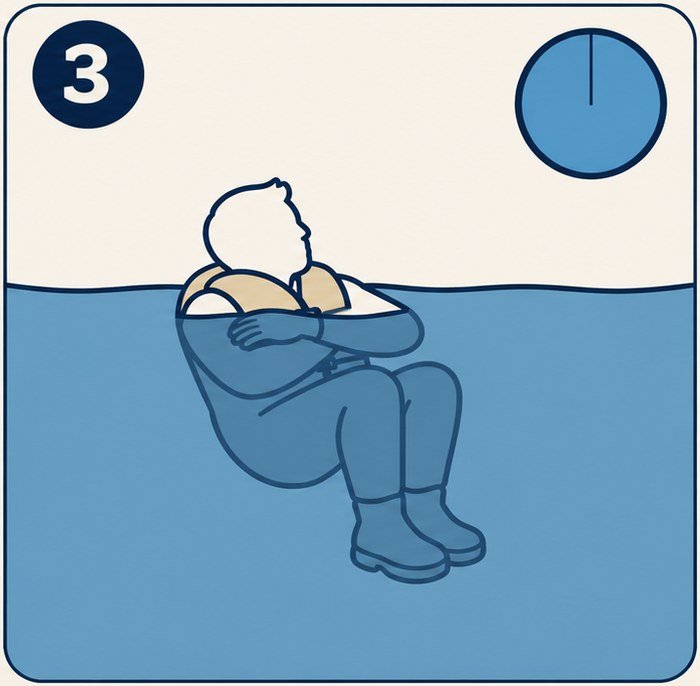 About an hour before hypothermia takes consciousness
- 1. About 1 minute: control your breathing
- 2. About 10 minutes of useful movement
- 3. About an hour before hypothermia takes consciousness
Source: Washington State Parks
Plan the float. Washington State Parks advises against boating alone and calls for a float plan plus two forms of waterproof communication. A float plan gives someone ashore your route and expected return. Check its boater education rules to see whether you need a Washington State Boater Education Card.
Know what is downstream. Sweepers are trees hanging low over the water. Strainers let water through but trap boats and people. Woody debris, logjams and logs collected at bridge piers create serious hazards. Check the route, gauges and river forecast before launching, especially in rain. High, cold water may require waiting.
Keep the boat orderly. Warn the operator before standing or shifting position. Sit or brace before crossing rough water or making a sudden maneuver. Stay clear of loaded lines, wear glasses and turn away from above-water snags. Clear other rods during a hookup and keep fishing line away from the motor.
Handle lead carefully. Wash with soap and water after handling pencil lead; hand sanitizer does not remove lead. Wear grippy footwear at ramps and bars. Bring waterproof layers and dry clothes.
WDFW Rules to Check
Check the exact river section and planned date, including:
- Fishing openings and emergency changes.
- Species identification, retention and catch-record requirements.
- Hook, barb, bait and attractor requirements.
- Weight arrangements and anti-snagging requirements.
- Rod and line requirements.
- Rules on fishing from a boat or using a motor.
- Released-fish handling requirements.
- Night-fishing restrictions and other local provisions.
Rules change by river and in season. Check the current WDFW sport fishing regulations and emergency rules before every trip.
A Guided Day and What to Ask
Your guide operates the boat and calls the casts. Your work is to follow the call, keep the line under control and watch the rod tip. Say if you are new so the plan can be explained before reaching tight water.
Ask before booking:
- Will this trip focus on side drifting or mix methods?
- Will we use a drift boat or jet sled, and how much room is available?
- What tackle, bait and clothing should I bring?
- What happens if the river rises or the planned float becomes unsuitable?
- Which current rules affect the trip and any retention plan?
- How will we handle casts, snags and a hookup?
- Can you explain the rig and boat-control decisions as we go?
Ask your guide for their WDFW guide license number before you book.
Learn More
- Washington State Parks: Wear a Life Jacket.
- Washington State Parks: Cold Water Safety.
- Washington State Parks: Boater Education & Safety.
- WDFW Water Access Sites.
- WDFW North Coast Winter Steelhead Surveys.
- WDFW Steelhead Management.
- USGS Water Data for Washington and NOAA Northwest River Forecast Center.
- WDFW Sport Fishing Regulations and Emergency Rules.
Glossary
- Side Drifting
- Fishing a drift rig beside a boat moving downstream with the bait.
- Bobberdogging
- A float rig fished from a moving boat; see Float Fishing.
- Boondogging and Free Drifting
- Other names for related variations; not taught here.
- Bail
- Wire arm opened to cast and closed to retrieve.
- Leader
- Line between the swivel and the hook.
- Snap Swivel
- Swiveling connector with a clip for the weight.
- Pencil Lead
- Lead wire cut into drift weights.
- Slinky
- Flexible weight filled with shot.
- Egg Loop
- Hook knot leaving a loop to secure bait or yarn.
- Yarnie
- Small trimmed yarn ball used as bait.
- Drift Bobber
- A buoyant lure that helps hold the hook above the rocks.
- Seam
- Boundary between currents moving at different speeds.
- Kicker
- Small outboard used to control the drift.
- Hydrograph
- Graph of a river measurement over time.
- Riffle
- Shallow, moving water with a broken surface.
- Creel Survey
- WDFW interviews with anglers about their fishing.
- Attractor
- Bright lure or bead that helps fish find the bait.
Guides Who Specialize in This
More River Methods
Explore Drift Fishing, Float Fishing, Pulling Plugs and Plunking for other presentations in moving water.
At a Glance
| Field | Summary |
|---|---|
| Target Species | Winter steelhead. |
| Best Times | North coast: hatchery fish early (December–January), wild fish later (February–April); these aren't season dates. |
| Boat | Drift boat on oars or powered boat controlled with a kicker. |
| Main Job | Keep the boat with the bait near the bottom and watch line angle. |
| Key Setup | Matching outfits with light weights that tap bottom. |
| Beginner Focus | Follow the cast call, recover slack and watch the tip. |
| Conditions | Check flow trend and color; confirm access before towing. |
On This Page
- What Side Drifting Is and When It Beats Other Methods
- Target Species and Where in Washington
- River by River
- Seasons and Conditions
- Rods, Reels, Line and Leader
- Terminal Tackle and Rigging, Step by Step
- By Species
- Technique, Step by Step
- Worked Examples
- The Bite, Hook Set, Fight and Landing
- Handling and Release
- Common Mistakes and Fixes
- Tips That Make the Difference
- When It's Slow
- Safety
- WDFW Rules to Check
- A Guided Day and What to Ask
- Learn More
- Glossary
- Guides Who Specialize in This
- More River Methods