

Drift Fishing
How to drift fish for steelhead and salmon from the bank or an anchored boat: the corky rig, the cast, the tick and the hook set.
How to drift fish for steelhead and salmon from the bank or an anchored boat: the corky rig, the cast, the tick and the hook set.
Drift fishing teaches you to feel what happens beneath moving water. A run is a stretch of fairly steady current. Cast upstream, let the rig bounce through the run and reel in before starting again. You can fish this way from shore or an anchored boat. A small buoyant drift bobber helps lift the hook above the rocks while the weight keeps the presentation near bottom.
The skills build together: choose enough weight, control the slack and respond when the drift changes. Learning the difference between a bite and a rock takes practice. Start with reachable water where you can follow the line. A clean, controlled drift teaches more than a long cast you cannot feel.
What It Is and When It Beats Other Methods
Drift fishing moves a bait or lure through the water instead of holding it in place. The goal is a natural presentation near the river bottom, usually within a foot or so. The weight touches down, lifts and touches again as current carries the rig downstream.
Why It Works
A drift bobber adds buoyancy to the hook and bait, helping them ride above rocks and reducing hang-ups. The weight controls their path. More weight slows the drift; less weight lets it move faster. Your job is to keep contact without making the rig drag.
Because the presentation travels, you can cover different lanes with successive casts. Side drifting and related moving-boat methods grew from the same principle. First learn to recognize a useful drift from a stable position. That gives you a reference when current, depth or your position changes.
It is a useful choice when:
- You want to cover moving water. The rig searches as it travels through a run.
- You can reach a manageable lane from shore. WDFW describes working a run from the near bank toward the far bank.
- The water has moderate depth and pace. Textbook steelhead water moves at walking speed and runs about 4–8 ft deep.
- Higher, colored water has created softer edges. Fish may hold in slower water near the bank.
Logs and broken rock make bottom contact harder to manage. A float can suspend the presentation above those snags. In slow pools, watch for the weight settling and staying put. Adjust the presentation or change methods when you cannot keep it moving.
Brushing Up: Change weight before changing everything else. If the rig has stopped traveling naturally, a new color will still follow the same poor path.
Target Species and Where in Washington
Steelhead are the main focus, with both winter and summer runs in Washington. Most summer runs are east of the Cascades, with summer fish in a few western rivers. WDFW also describes drift gear for salmon, including separate line guidance for Chinook and pink salmon. Coho belong in the salmon setup described below.
See Steelhead and Salmon for the broader species pages.
Where It Works in Washington
- Olympic Peninsula and coast: The Bogachiel, Calawah, Sol Duc and Hoh appear in WDFW's north coast steelhead surveys. WDFW also names the Wynoochee among its coastal steelhead rivers.
- Puget Sound watersheds: The Skykomish and Skagit are among WDFW's steelhead watersheds. Being on that list doesn't mean a river is open; check the exact river and stretch with WDFW.
- Southwest Washington: On the Cowlitz, anglers drift bait, yarnies and beads, and spring Chinook are taken on drift gear. WDFW reports also list Kalama and Lewis bank anglers with steelhead and salmon.
For regional context, see Olympic Peninsula Winter Steelhead and Skagit and Snohomish Salmon and Steelhead.
Check public access separately from fishing rules. A visible bank, bridge or path does not establish permission to cross land. Use WDFW's access information to begin planning, then check the individual site.
River by River
Best Times, Not Regulations. These timing notes draw partly on past WDFW creel surveys, which interview anglers about their fishing. The north coast pattern comes from historical survey tables, not a forecast for your trip. Southwest reports identify bank anglers without proving which presentation they used.
A riffle is shallow water with a broken surface. A tailout is the shallowing end of a pool above the next riffle. Green water means stained water that still has some visibility.
On a gauge, discharge means flow and gage height means water level. Turbidity means cloudiness. A hydrograph shows how a measurement changes over time. There is no single good number for any of these rivers. Learn your river's readings by comparing its rise, peak and drop with the color and current you see.
A boat ramp listing doesn't promise bank room. Check whether the site has a usable bank position and a safe route back.
Per-River Access Map
- WDFW water access site
- USGS gauge
Forks rivers

- 1. Wilson (Bogachiel River access)
- 2. USGS 12042800 Bogachiel River gauge
- 3. USGS 12043000 Calawah River gauge
- 4. Salmon Hatchery (Sol Duc River access)Sol Duc: no live gauge
- 5. USGS 12041200 Hoh River gauge
Dashed line: Olympic National Park boundary, park rules apply upstream.
Skykomish River

- 6. USGS 12134500 Skykomish River near Gold Bar gauge
Cowlitz, Kalama and Lewis rivers
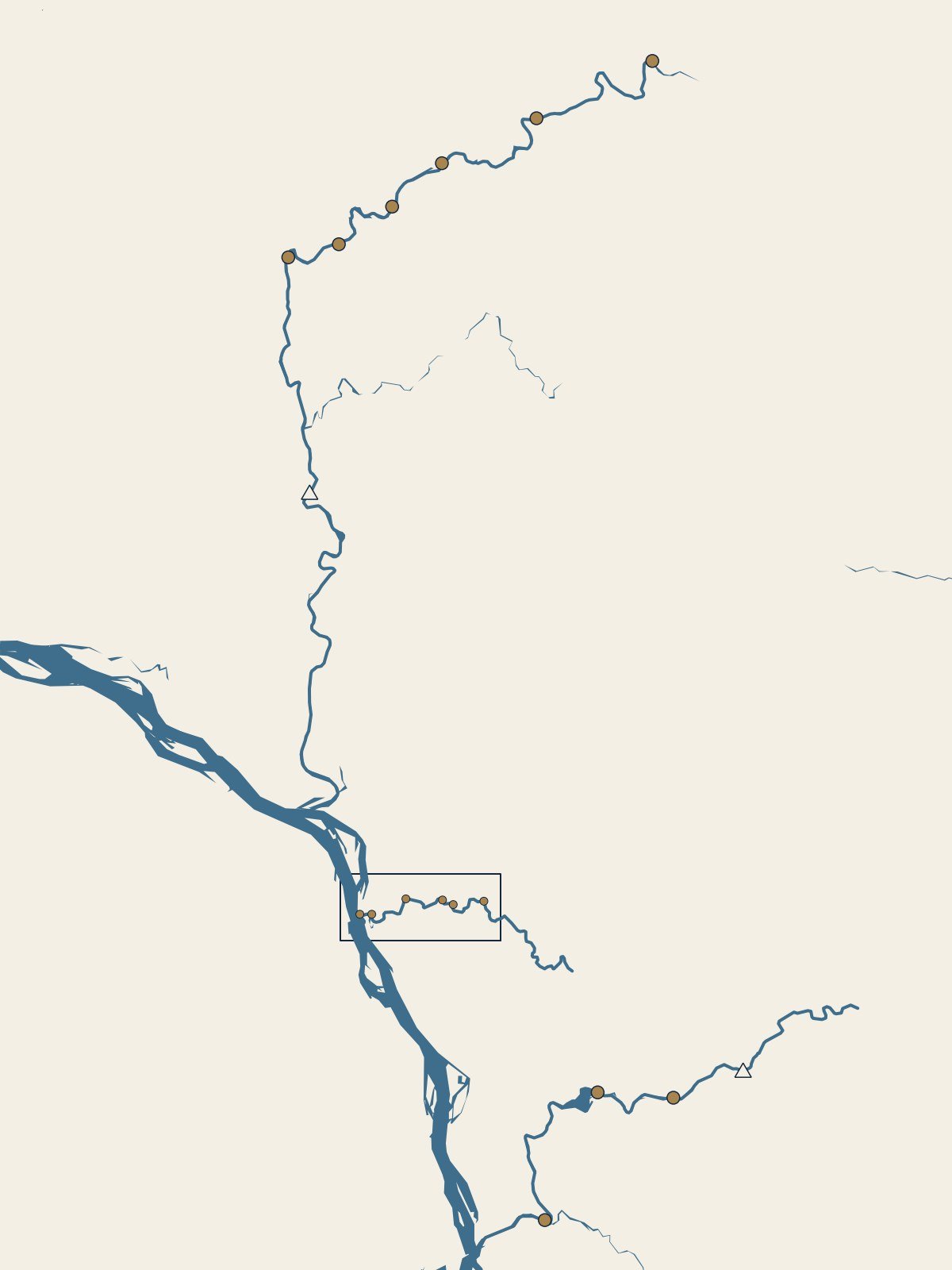
- 7. Barrier Dam
- 8. Blue Creek
- 9. Massey Bar
- 10. Toledo
- 11. I-5 Bridge
- 12. Wallace Bar: easement on private land
- 13. USGS 14243000 Cowlitz River gauge: regulated
- 20. Cedar Creek
- 21. Island
- 22. Pekin Ferry
- 23. USGS 14220500 Lewis River gauge: regulated
Frame: Kalama close-up below.
Kalama close-up

- 14. Beginners' Hole
- 15. Modrow Bridge
- 16. Prichard
- 17. Hand
- 18. Fisherman's Loop
- 19. Sportsman's Club
Kalama: no live gauge.
Check each WDFW site page before you go.
River lines and gauges: USGS. Access sites: Washington Department of Fish and Wildlife (WDFW). Park boundary: National Park Service.
Simplified drawing. River data from USGS; access sites from WDFW. Not the legal boundary; WDFW rules govern. Not endorsed by WDFW.
Bogachiel
Species and Best Times: Historical WDFW surveys show hatchery winter steelhead mainly in December–January and wild steelhead releases mainly in February–April. Those records describe past fishing, not current retention rules.
Access: Start with WDFW's Wilson site, which lists a concrete ramp and restroom. Inspect the bank before choosing a casting position.
Gauge: USGS 12042800, Bogachiel River near Forks provides streamflow, gage height, water temperature and turbidity.
High, Good and Low: On a high, muddy rise, assess softer bank water and your exit route. As it drops and clears to high green water, try the end of the run and the tailout. Low clear water shifts attention toward deeper cover and the head of a run. Compare what you see with this gauge over repeated visits and learn its numbers over time.
Rules change by river and in season. Check the current WDFW sport fishing regulations and emergency rules before every trip.
Calawah
Species and Best Times: Historical WDFW tables show hatchery winter steelhead mainly in December–January, with wild releases more prominent later, from February into April.
Access: Find public access through WDFW's water access site map. Confirm the site's river and approach before traveling.
Gauge: USGS 12043000, Calawah River near Forks provides streamflow, gage height, water temperature and turbidity.
High, Good and Low: Treat a fast, muddy rise cautiously. During a clearing drop, inspect softer current and tailouts; in low clear water, look toward deeper slots and broken water near the head of a run. Read color alongside the hydrograph and learn which readings match workable water through observation.
Rules change by river and in season. Check the current WDFW sport fishing regulations and emergency rules before every trip.
Sol Duc
Species and Best Times: In the historical WDFW surveys, wild steelhead releases appear from January through April, with the strongest representation in March.
Access: WDFW's Salmon Hatchery site lists a concrete ramp, an ADA loading platform and accessible parking and restroom facilities. A loading platform does not by itself establish an accessible fishing station.
Gauge: The Sol Duc has no active USGS flow gauge. Don't borrow a neighboring river's reading; judge the water by eye.
High, Good and Low: Observe whether water is rising, holding near a peak or dropping. High off-color water favors inspecting slow edges; clearing green water points toward tailouts. Low clear water directs attention to heads of runs and deeper cover. Build a record of local conditions rather than assigning a borrowed gauge number.
Rules change by river and in season. Check the current WDFW sport fishing regulations and emergency rules before every trip.
Hoh
Species and Best Times: WDFW's historical surveys record wild steelhead releases from January into April. The survey reaches extend from Oxbow Campground to Barlow's downstream and from Oxbow Campground to the Olympic National Park boundary upstream. These are survey descriptions, not access routes.
Access: Find public access on WDFW's water access site map. Upstream of the park boundary, Olympic National Park sets its own fishing rules. Check both WDFW and Olympic National Park rules; WDFW links the park guidance from its creel survey page.
Gauge: USGS 12041200, Hoh River at US Highway 101 near Forks provides streamflow and gage height. Check water color at the river.
High, Good and Low: A fast rise and muddy color call for caution. A clearing drop gives you reason to inspect softer edges and tailouts; low clear water shifts the search toward deeper cover and broken current. Learn the local relationship between the gauge and the stretch you fish; no flow threshold is sourced.
Rules change by river and in season. Check the current WDFW sport fishing regulations and emergency rules before every trip.
Skykomish
Species and Best Times: WDFW shows hatchery winter steelhead on the Skykomish near Gold Bar and runs a wild summer steelhead broodstock program on the river. For timing, check WDFW fishing reports.
Access: WDFW lists three sites on the Skykomish. Lewis Street is in Monroe at the SR 203 bridge and has a boat ramp. Big Eddy is by the US 2 bridge east of Gold Bar. Simmons, also called Clay Banks Hole, is near Gold Bar and is reached by a trail to the river. Read each site page for parking and the approach before you go. For other sites, use WDFW's water access site map.
Gauge: USGS 12134500, Skykomish River near Gold Bar provides streamflow, gage height and water temperature. Judge color separately at the bank.
High, Good and Low: Inspect slow edges in high off-color water. A clearing drop can improve the conditions for assessing a run; low clear water points toward its head, deeper slots and broken current. Record the gauge alongside what you see and learn useful local readings over time.
Rules change by river and in season. Check the current WDFW sport fishing regulations and emergency rules before every trip.
Cowlitz
Species and Best Times: WDFW reports include bank anglers with steelhead in late February and late September to early October. Spring Chinook timing runs from March toward a May peak, while coho appear below I-5 in early October reports. Drift gear is among the documented Cowlitz presentations.
Access: WDFW lists Barrier Dam, Blue Creek, Massey Bar, Toledo, I-5 Bridge and Wallace Bar. Blue Creek has shore access and accessible fishing platforms near the hatchery. Wallace Bar is a public fishing easement on private land; respect the landowner.
Gauge: USGS 14243000, Cowlitz River at Castle Rock provides discharge, gage height and turbidity. Its flow is regulated by upstream dams.
High, Good and Low: Compare a rapid muddy rise with a clearing drop after the peak. High off-color water directs attention to the slow bank; clearing green water to tailouts; low clear water to deeper slots and riffle heads. Compare repeat observations with the regulated gauge instead of assigning an unsupported good-flow number.
Rules change by river and in season. Check the current WDFW sport fishing regulations and emergency rules before every trip.
Kalama
Species and Best Times: WDFW reports list bank anglers with steelhead in late February and spring Chinook in late April. Bank presentations include eggs and sand shrimp.
Access: Beginners' Hole is a bank site. Other WDFW sites include Modrow Bridge, Prichard, Hand, Fisherman's Loop and Sportsman's Club at the mouth. Check each ramp or launch listing for suitable bank access.
Gauge: There is no live USGS flow gauge. USGS 14223500, Kalama River below Italian Creek is historical, with its discharge record ending in 1982.
High, Good and Low: Allow time after a major storm and judge color locally. A rapid muddy rise differs from a settling, clearing drop. In low clear water, inspect the center and head of holes and fast water broken by cover. Learn these changes through local observations; another river's gauge cannot supply a Kalama target.
Rules change by river and in season. Check the current WDFW sport fishing regulations and emergency rules before every trip.
Lewis
Species and Best Times: WDFW bank reports include spring Chinook in late April and Chinook and coho in late September to early October. They cover bank anglers in general, not drift fishing alone.
Access: Check Cedar Creek, Island and Pekin Ferry. Shore access near Woodland includes private land, so confirm your route.
Gauge: USGS 14220500, Lewis River at Ariel provides regulated discharge and gage height.
High, Good and Low: Compare rising, peaking and dropping flow with observed color. A clearing drop is a planning cue; in high or low water, inspect conditions at the actual bank. Learn the river through repeated visits; there is no one good number.
Rules change by river and in season. Check the current WDFW sport fishing regulations and emergency rules before every trip.
Seasons and Conditions
Best Times, Not Regulations. North coast winter steelhead surveys run from December into April. Southwest timing also includes spring Chinook, with March through a May peak on the Cowlitz, Kalama and Lewis. Use the river notes above instead of a single statewide salmon calendar.
Before choosing a run, check:
- Flow: Read the USGS trend and the NOAA Northwest River Forecast Center outlook. A recent reading needs context: look at what happened before it and what is forecast next.
- Clarity: In off-color water, larger drift bobbers and brighter or higher-contrast colors are options. Clear water calls for smaller bobbers and can support a longer leader.
- Temperature: Very cold and warm conditions can delay migration. Check temperature where the river's gauge provides it, without treating a study threshold as a bite forecast.
- Holding water: High off-color water points toward slow edges; low clear water toward deeper cover and the head of a run.
Reading the Water: Flow, Color and Temperature
Adult salmon stop feeding after entering fresh water and rely on stored reserves. Saving energy makes easier travel lanes important. That finding is about adult salmon, not steelhead.
Snake and Columbia studies connect migration speed with flow, temperature and turbidity. Rapid rises sometimes interrupted upstream movement. Columbia dam counts fell during peak floods and increased as flows dropped. This helps explain why a clearing drop deserves attention, but it does not predict a bite in a particular run.
Flow-Gauge Reading Chart

- 1. RisingA rapid rise can pause movement
- 2. Peak
- 3. DroppingMovement can pick up as flows drop
Snake and Columbia study patterns, not a bite forecast.
Turbidity is cloudiness caused by material suspended in the water. Rain can wash in soil and turn clearer green water muddy brown. The cited studies found migration nearly stopped with visibility below about 2 ft. That observation is not a universal fishing cutoff or a reason to seek an exact visibility band.
The Bogachiel and Calawah gauges provide turbidity and temperature. The Cowlitz at Castle Rock provides turbidity, the Skykomish near Gold Bar provides temperature and the Hoh station provides flow and height only. Where a measurement is missing, look at the water rather than borrowing another river's value.
For presentation choices, the maker guidance uses pinks, flame and egg colors in green water. Clear-water options include metallics, UV and dark colors; off-color choices include chartreuse, high contrast and glow. These are starting choices. Keep checking the weight and drift path after a color change.
Water-Color Scale

- 1. Muddy: high off-color waterFish hold in slow water near the bankFish nearly stop moving below about 2 ft visibilityDrift bobber #6 or #4 (or two stacked)Colors: chartreuse, high contrast, glow
- 2. High greenFish the end of the run and tailoutColors: pinks, flame, egg
- 3. Clearing
- 4. Low clearHead of the run, center and top of holes, deep slotsDrift bobber #14 or #12Colors: metallics, UV, dark
The temperature evidence needs the same care. Steelhead migration may pause near 4–5°C (39–41°F). At the warm end, the cited guidance places adult migration blockage around 21–22°C (70–72°F). Salmon and steelhead also slow in warm water. These are biological observations, not a safe-temperature band or a schedule for fishing.
Brushing Up: Record flow trend, color, temperature when available and the weight that maintained contact. Over time, those notes help connect a gauge reading to your own stretch.
Rods, Reels, Line and Leader
A sensitive rod helps you feel contact. A smooth drag, the reel's controlled release of line under pressure, helps during a fight. High-modulus graphite is favored for sensitivity, while a consistent drag matters especially for steelhead.
Monofilament, or mono, is a single strand of line. Fluorocarbon is another line material used for leaders, the section between the swivel and hook. A slinky is a flexible weight made from cord filled with lead shot. The table offers a good starting setup assembled from the sourced steelhead ranges. Adjust it to the water and your rod's ratings.
| Gear | Good Starting Setup | Range or Context | Why |
|---|---|---|---|
| Rod | 9 ft medium steelhead rod. | Popular lengths are 8'6"–9'6"; medium-light 6–10 lb, medium 8–12 lb, medium-heavy 10–20 lb and heavy 12–25 lb line ratings. | Length helps line control; a sensitive tip helps transmit contact. |
| Reel | Spinning or casting reel with smooth drag. | Match it to the rod; spinning anglers often choose lighter, longer rods. | Drag should release line consistently during a run. |
| Main Line | 12 lb mono. | Most steelhead anglers: 10–14 lb; 8 lb on light spinning gear in low clear water; 20 lb on casting gear in high turbid water. | Choose line and rod together rather than changing line beyond the rod's rating. |
| Leader | 18–22 in of 10 lb fluorocarbon. | Same test as the main line or lighter, so the leader breaks first. Extend to 30 in in very clear water. | Clearer water supports a longer leader. |
| Hooks | Size 1 octopus-style egg-loop hook. | Size 6–3/0 overall; size 1 or 1/0 paired with a #8 or #10 Lil' Corky in average conditions. | The bobber must not crowd the hook opening. |
| Weight | 3/16 in pencil lead, cut to suit the drift. | 1/8 in in low slow water; 1/4 in in high heavy current; slinkies are another option. | Adjust until the rig touches bottom without dragging. |
| Drift Bobber | #10 Lil' Corky with yarn. | #14 or #12 in clear water; #6 or #4 (sold by the maker), or stacked bobbers, in turbid water. | Buoyancy helps keep the hook above rocks. |
Pencil-lead measurements describe diameter; cut length changes the amount of lead. Check the full rig against the rod's lure rating.
WDFW lists an 8½–9 ft rod rated for 15–30 lb line among its salmon drift-gear examples. Its main-line guidance is 20–25 lb for Chinook and 10–15 lb for pink salmon. Pick a rod rated for the line you choose; pink salmon line sits below that example rod's rating.
Starter Kit vs Upgrade Path
Starter Kit
- A medium steelhead rod within the 8'6"–9'6" range, a smooth-drag reel and 10–14 lb mono matched to the rod.
- Seaguar STS Trout & Steelhead for the leader. It's made in 4–17 lb. Pick a test no heavier than your main line, so the leader breaks first. With a 10 lb main line, use 10 lb or lighter.
- Gamakatsu Octopus Hook in size 1 or 1/0 and Yakima Bait Lil' Corky in #8 or #10, with generic yarn. The pairing leaves a suitable hook opening beneath the bobber.
- Generic pencil lead, surgical tubing, slinkies, snap swivels and beads.
Upgrade Path
- Lamiglas SI Salmon & Steelhead SI90MC: a sensitive graphite casting rod, 9 ft long with medium power and fast action. It is rated for 8–12 lb line and 1/4–5/8 oz lures, which covers the 12 lb main line in the starting setup. It isn't rated for 14 lb or heavier main line or for WDFW's 20–25 lb Chinook line.
- Yakima Bait Spin-N-Glo: a buoyant spinning option in #12, #10 or #8, with #6 or #4 options for high turbid water. Its rotation needs the rigging changes below.
- Pautzke Fire Cure: an egg-preparation option for the egg clusters described below.
- Superline, a thin, low-stretch line such as braid, once you have learned the basic drift. On spinning gear, choose superline one strength step above the mono you would use. On casting gear, go two steps up. Stay within the rod's rating.
Terminal Tackle and Rigging, Step by Step
Bank Drift Rig

- 1. Main line
- 2. Snap swivel
- 3. Pencil lead in rubber tubing: pulls free on a snag
- 4. Leader: 18–22 in fluorocarbon (to 30 in in very clear water)
- 5. Lil' Corky #8 or #10
- 6. Egg-loop hook, size 1 or 1/0, with yarn
- 7. Slinky option: hangs up less
A swivel joins the main line to the leader, with its snap, a small safety-pin clip, providing a weight attachment. An egg loop is a snell, a knot around the hook shank, that leaves a loop to hold bait. Lay out the parts before tying so you can follow the connection from rod to hook. If the hook is already tied, thread the bobber onto the leader's free end before attaching that end to the swivel.
How It Works, Step by Step
- Attach the snap swivel. WDFW's standard setup puts it at the end of the main line. Use a connection suited to your line and pull-test it before adding the rest.
- Fit the weight. Push the snap through a short piece of rubber tubing and fit pencil lead into it, or attach the snap through a slinky's cord. A slinky is cord filled with lead shot and tends to hang up less than pencil lead.
- Add the leader. For the steelhead starting setup, use 18–22 in of fluorocarbon, extending to 30 in in very clear water. Match the leader to your main line or go lighter, so the leader breaks first and you keep the rest of the rig. Seaguar STS Trout & Steelhead is made in 4–17 lb; pick a test no heavier than your main line. The salmon setup uses its separate 12–48 in leader range.
- Thread on the drift bobber. A #8 or #10 Lil' Corky pairs with a size 1 or 1/0 hook in average conditions. Keep the hook opening clear rather than hiding it beneath an oversized bobber.
- Fit the egg-loop hook. Use an egg-loop snell or begin with a pre-tied leader. The loop holds the bait against the shank. A Gamakatsu Octopus Hook in size 1 or 1/0 fits that pairing.
- Choose yarn or bait after checking rules. WDFW describes yarn with optional bait or scent. Check current rules for your water before choosing either. Where bait is allowed, use a nickel-size cluster of cured eggs or a sand shrimp, with shrimp head down and the loop around its body.
- Inspect the finished rig. Check knots, clear the hook point and make sure the leader is not wrapped around the weight. A breakaway weight connection is intended to release on a snag, but do not assume every snag will leave the rest intact.
For mono connections, an improved clinch knot is an option. Pass the loose tag end through the swivel eye, wrap it around the standing line and pass it through the small loop beside the eye. Then pass it through the larger loop just formed. Moisten, tighten slowly and test the connection. Follow the line maker's guidance for wraps and tag length, especially if changing materials.
Improved Clinch Knot

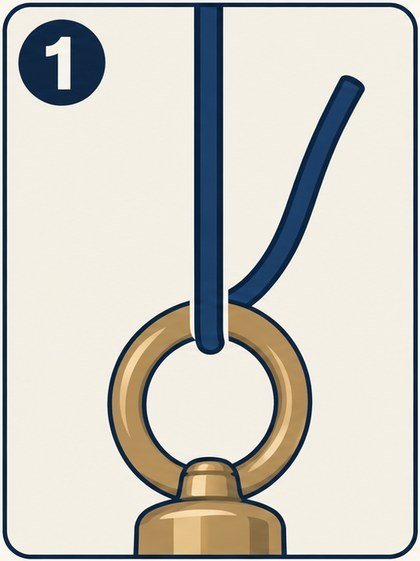 Line through the swivel eye
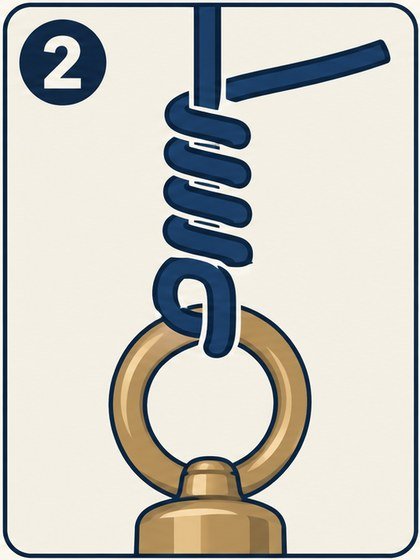 Wraps around the standing line
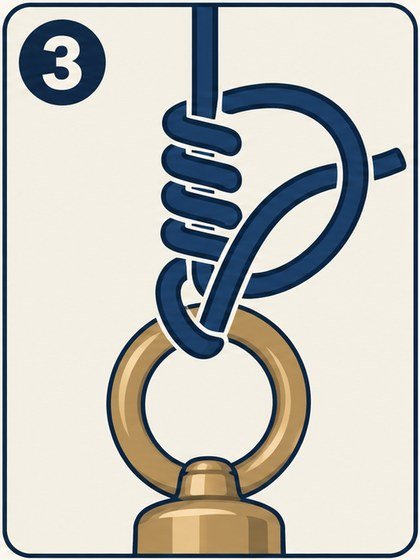 Tag through the small loop by the eye, then through the big loop
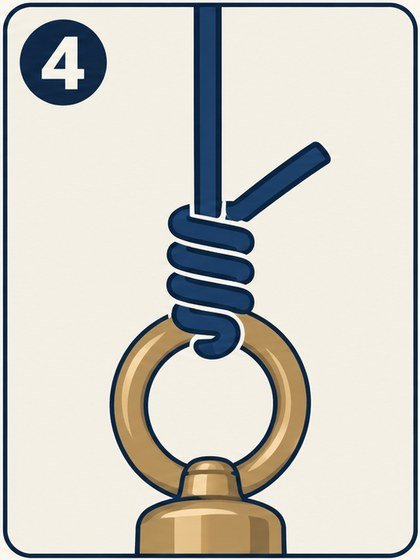 Moistened and seated
- 1. Line through the swivel eye
- 2. Wraps around the standing line
- 3. Tag through the small loop by the eye, then through the big loop
- 4. Moistened and seated
Wraps: follow the line maker.
Egg-Loop Knot

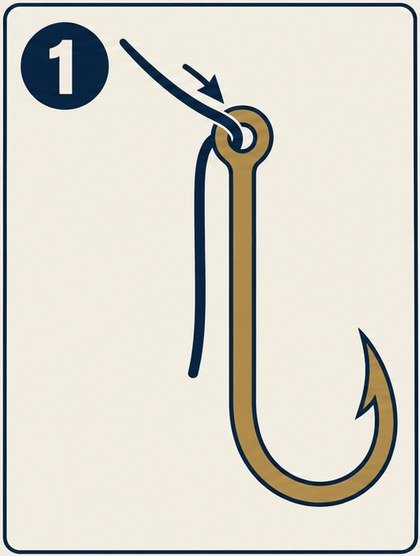 Leader through the hook eye
 Snell wraps along the shank
 Line back through the eye
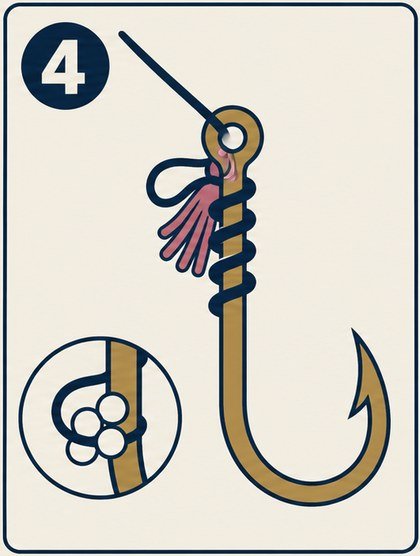 Pull to open the loop; hold yarn or an egg cluster against the shank
- 1. Leader through the hook eye
- 2. Snell wraps along the shank
- 3. Line back through the eye
- 4. Pull to open the loop; hold yarn or an egg cluster against the shank
Wraps: follow the leader maker.
Choosing Weight
- Low and slow: 1/8 in pencil lead or a short slinky containing 6–8 shot.
- Average flow: 3/16 in pencil lead or a suitable slinky.
- High, heavy current: 1/4 in pencil lead, adjusted in length to the drift.
- Snaggy bottom: Consider a slinky to reduce hang-ups.
Weight-by-Flow Card

- 1. Low and slow: 1/8 in pencil lead or a short 6–8 shot slinky
- 2. Average: 3/16 in pencil lead or slinky
- 3. High and heavy: 1/4 in pencil lead
Slinkies are an alternative, not extra weight.
Carry spare weights and leaders so you can make changes calmly. Prepare leaders ahead or carry pre-tied leaders.
A Spinning Drift-Bobber Option
Spin-N-Glo needs room to rotate. Use a slightly heavier leader than with a Lil' Corky and place one or two beads between the lure and hook. Cast straight across rather than upstream for this version. These changes help reduce tangles and keep the lure turning.
Common drift sizes are #12, #10 and #8. Go to #6 or #4 in high turbid water and #14 in very clear water. Check the lure beside you before casting.
Bait and Scent
Salmon roe and sand shrimp are the most popular baits on WDFW's drift setup. Check current WDFW bait and scent rules before preparing either for your water.
Pautzke Fire Cure is an egg cure available in Red, Pink, Orange and Natural. Its role here is preparing the egg clusters; follow the product directions. Sand shrimp and egg scents can also mask human odor. Scent cannot correct a dragging weight or tangled leader.
If bait washes away, the buoyant bobber can still fish on its own. Inspect it after a snag or suspected bite rather than assuming the whole presentation has stopped working.
By Species
Winter Steelhead
Start with 10–14 lb main line, an 18–22 in fluorocarbon leader, a size 1 or 1/0 hook and a #8 or #10 Lil' Corky. Extend the leader to 30 in in very clear water. Match the pencil lead or slinky to the flow, and consider eggs or sand shrimp after checking rules.
Tailouts and soft edges are useful places to assess. Match timing to the river: the historical north coast pattern and southwest bank reports cover different windows. Cold conditions can slow migration, so inspect the water as carefully as the calendar.
Summer Steelhead
Use the steelhead rig above.
A few western Washington rivers have summer runs, and WDFW runs a wild summer steelhead program on the Skykomish. WDFW reports also list Cowlitz bank anglers above I-5 with steelhead in late September to early October. Warm water can slow movement. Choose the presentation for the conditions you observe rather than assuming the word summer requires a different rig.
Salmon (Chinook and Coho)
WDFW's salmon example uses a corky-and-yarn presentation with a 12–48 in leader. WDFW gives 20–25 lb main line for Chinook, and Cowlitz spring Chinook are taken on drift gear. Use a rod that fits that line and casting load.
For pink salmon, WDFW gives 10–15 lb line on the same basic setup. Check the current salmon hook and anti-snagging requirements before arranging the rig.
By-Species Rig Cards
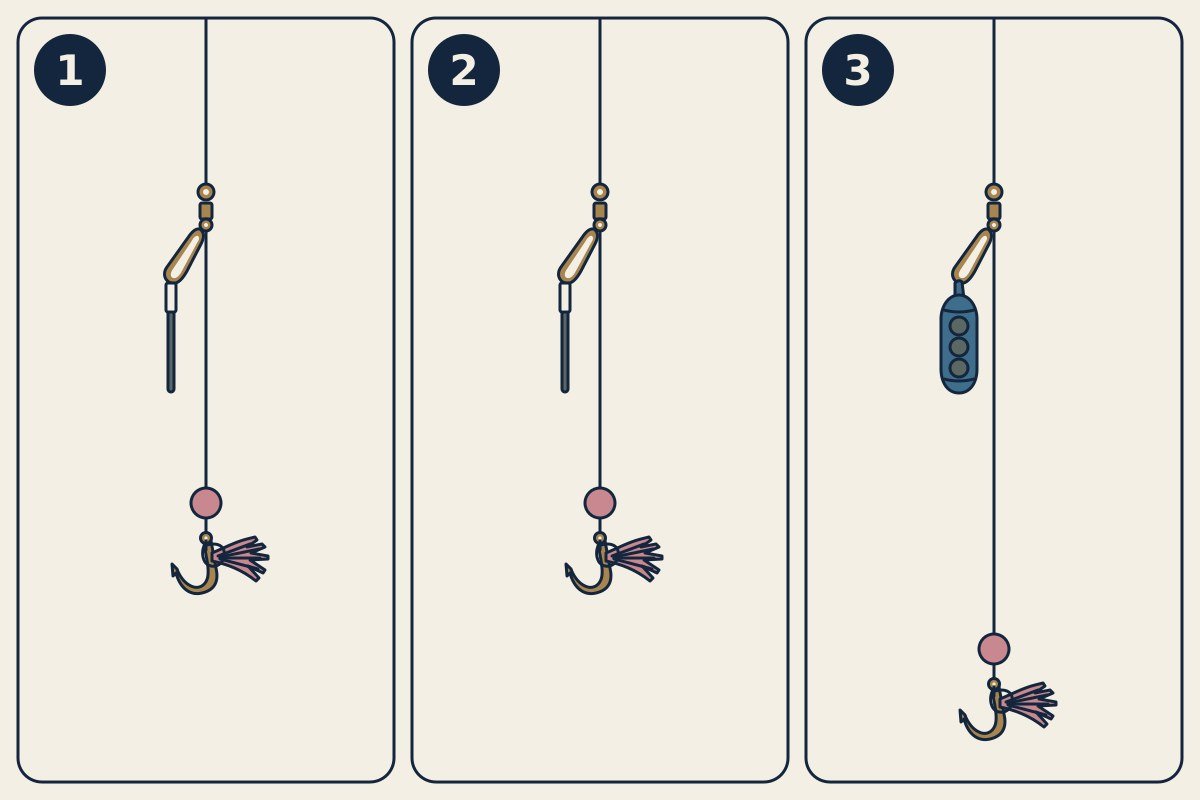

1. Winter steelhead
- 10–14 lb main line
- 18–22 in fluorocarbon leader (30 in very clear)
- Size 1 or 1/0 hook
- #8 or #10 Lil' Corky
- Pencil lead or slinky by flow
Check WDFW hook and anti-snagging rules for your water.
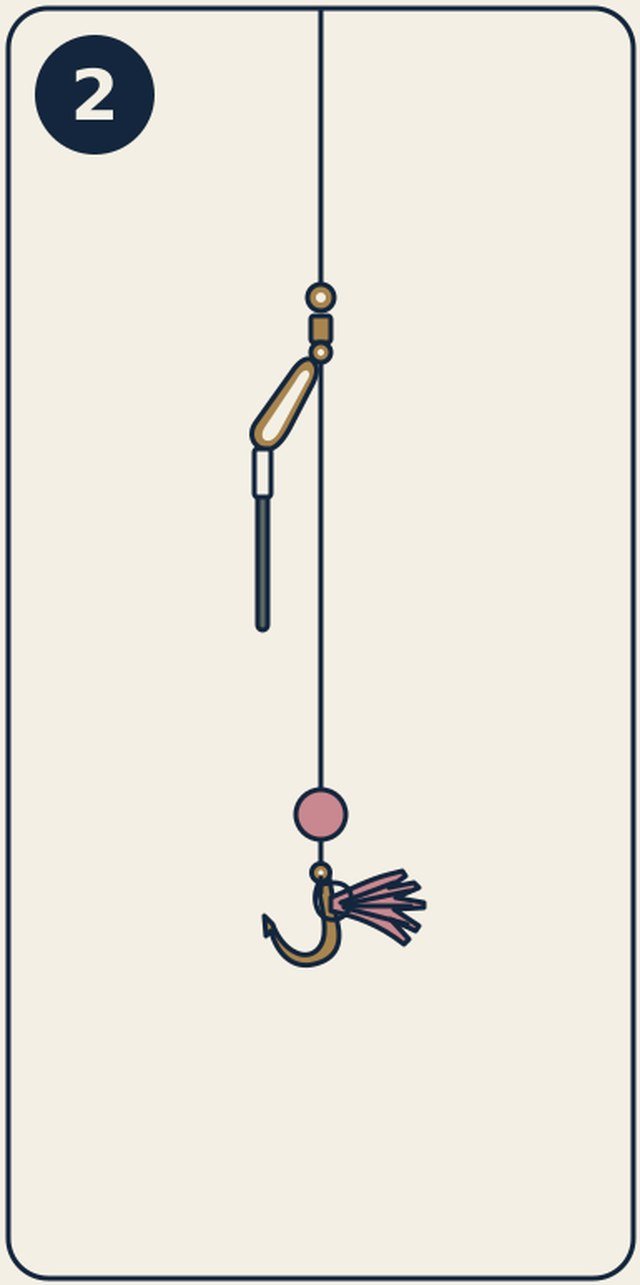
2. Summer steelhead
- Same rig as winter steelhead
Check WDFW hook and anti-snagging rules for your water.

3. Salmon (Chinook and coho)
- Corky and yarn
- 12–48 in leader
- 20–25 lb main line for Chinook
- Pink salmon: 10–15 lb line
Check WDFW hook and anti-snagging rules for your water.
1. Winter steelhead
- 10–14 lb main line
- 18–22 in fluorocarbon leader (30 in very clear)
- Size 1 or 1/0 hook
- #8 or #10 Lil' Corky
- Pencil lead or slinky by flow
Check WDFW hook and anti-snagging rules for your water.
2. Summer steelhead
- Same rig as winter steelhead
Check WDFW hook and anti-snagging rules for your water.
3. Salmon (Chinook and coho)
- Corky and yarn
- 12–48 in leader
- 20–25 lb main line for Chinook
- Pink salmon: 10–15 lb line
Check WDFW hook and anti-snagging rules for your water.
Technique, Step by Step
Overhead Cast Diagram

- 1. Angler on the near bank
- 2. Cast about 30–45° upstream
- 3. Let it drift along the bottom
- 4. End of the drift: about 30–45° downstream
- 5. Swing toward the near bank, then reel in
- 6. Start near and cast a little farther each time
- 7. Step a few feet downstream and repeat
How It Works, Step by Step
- Start with a plan for the run. WDFW describes working from the head, below a riffle, toward the tailout, the shallow end above the next riffle. Choose stable footing and a landing place before casting.
- Fish near water first. Cast upstream at about 30–45 degrees, starting close and reaching farther on later casts. Avoid wading through a lane before you have fished it.
- Let the weight settle. Close the bail, the wire arm on a spinning reel that you flip open to cast, or engage a casting reel. Then take up loose line. Keep enough contact to notice the weight without pulling it away from its path.
- Follow the line. Track it downstream with the rod tip. Reel in slack as the rig comes toward you. Too much tension lifts the rig; too little hides changes in its movement.
- Feel for repeated contact. Constant dragging calls for less weight; barely touching bottom calls for more. The rig should continue traveling rather than parking between rocks.
- Extend only while you retain control. At the bottom of the drift, pay out 3–5 ft of line several times; it's easiest with a baitcaster, a casting reel whose spool turns as line goes out. Stop feeding line if you can no longer feel or follow the presentation.
- Finish under control. WDFW describes fishing through to about 30–45 degrees downstream before retrieving. The maker also describes the drift ending as the rig swings toward shore. Stay alert during the swing and keep control until the rig is retrieved.
- Step and repeat where space allows. Cover nearer and farther lanes, then move through the run. In a crowd, fit into the existing line and fish from your position.
Drift Sequence

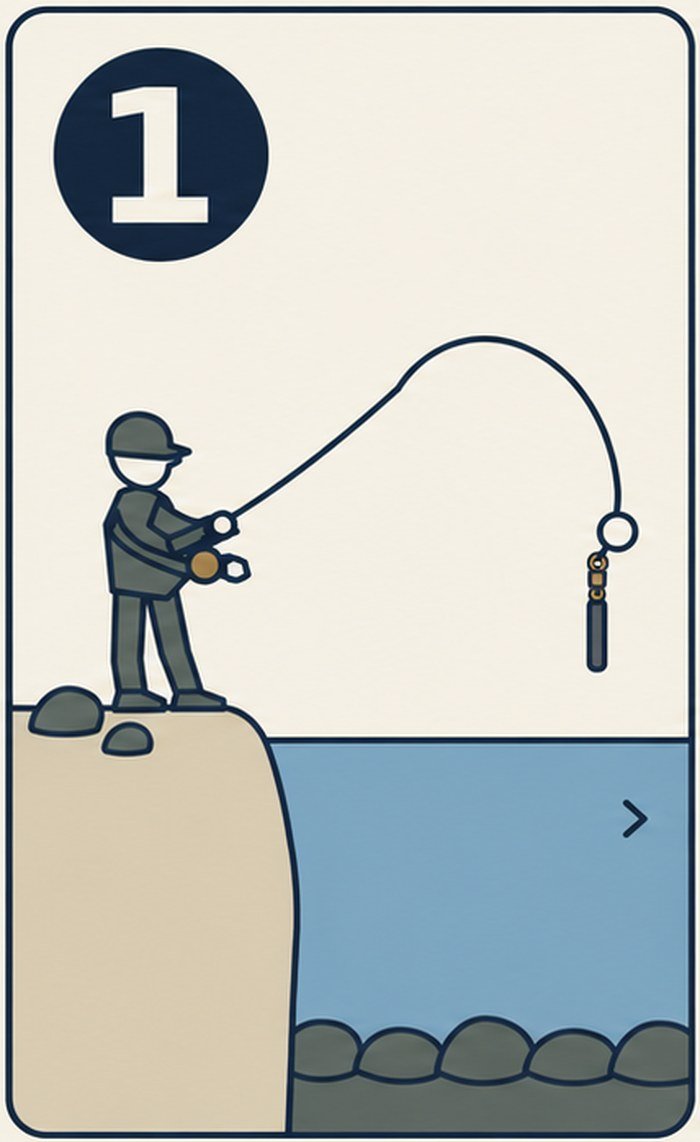 Cast
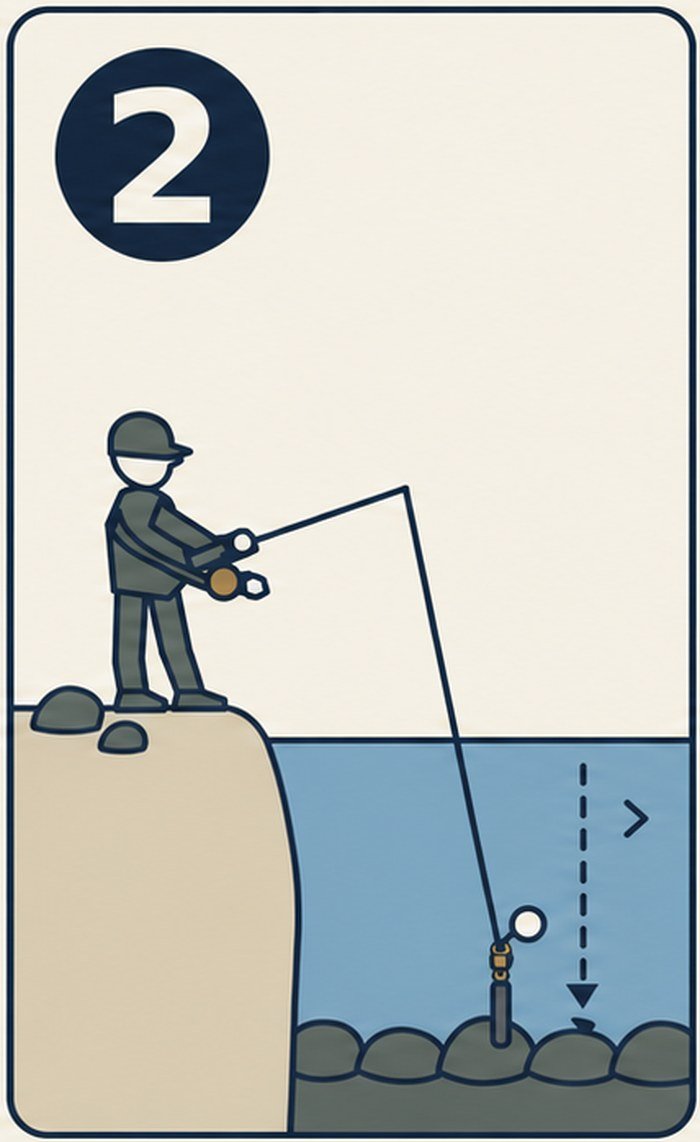 Let the rig settle
 Follow the drift with the rod tip
 Optional: pay out line at the bottom of the drift
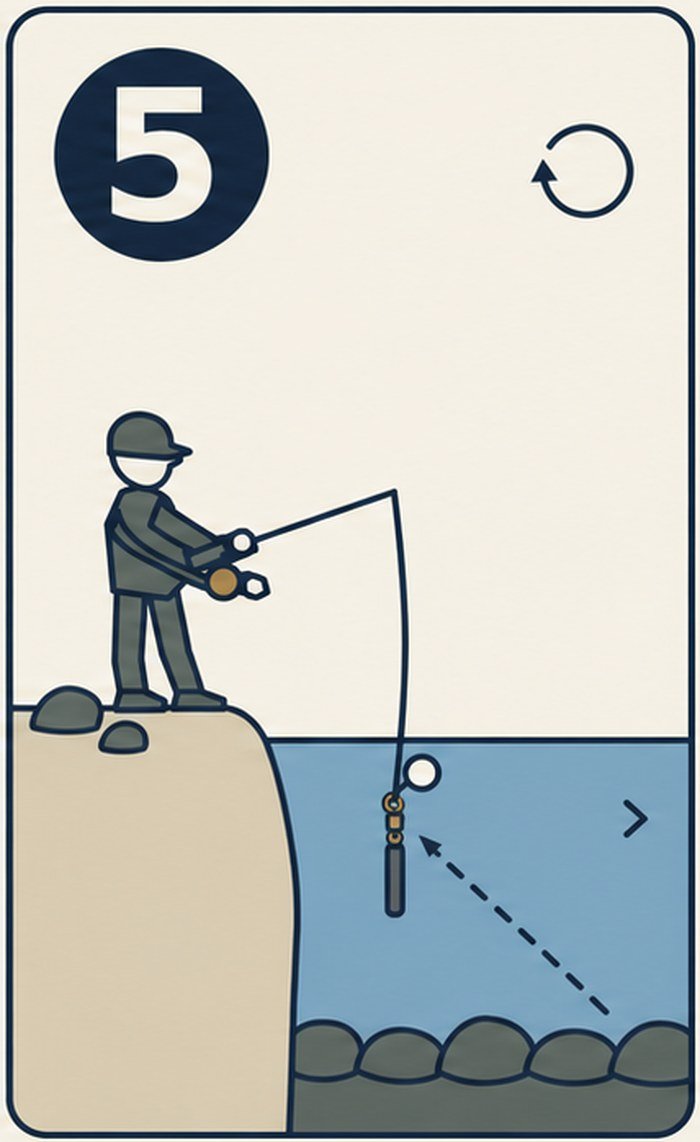 Retrieve and repeat
- 1. Cast
- 2. Let the rig settle
- 3. Follow the drift with the rod tip
- 4. Optional: pay out line at the bottom of the drift
- 5. Retrieve and repeat
WDFW describes bottom contact about every foot, while the maker describes taps every few yards. Their shared lesson is controlled movement with repeated contact. Learn that feel without trying to count taps against an unseen distance.
The Tick

 Drags constantly: too heavy
 Hardly or never touching: too light
 Taps now and then while moving: right
- 1. Drags constantly: too heavy
- 2. Hardly or never touching: too light
- 3. Taps now and then while moving: right
WDFW describes contact about every foot; the maker, every few yards. Learn the feel; don't count taps.
Back-Bouncing From a Boat
From an anchored boat, a weighted rig can be worked downstream by lifting the rod and releasing controlled line. Keep contact as the weight settles, then repeat. Anchor only where you can do it safely, and keep the rig under control.
Reading the Water
A run has a head, a deeper hole and a tailout. Learning those shapes on smaller water can make them easier to recognize.
- Walking-speed runs: Textbook steelhead water is about 4–8 ft deep, but fish also use riffles, pools and rapids.
- Tailouts: Look at the lower part of a hole, especially the deeper side beside a steep bank.
- Seams and structure: Assess current edges, the water below boulders and root wads (the exposed root masses of fallen trees) and the area below a drop-off. A seam is where currents of different speeds meet.
- High water: Inspect slower water near shore before wading past it.
- Low clear water: Look toward the center and head of holes, deeper slots and current broken by rocks or ledges.
- Visible activity: Notice rolling fish and where other anglers make contact, while leaving them room.
Reading a Run
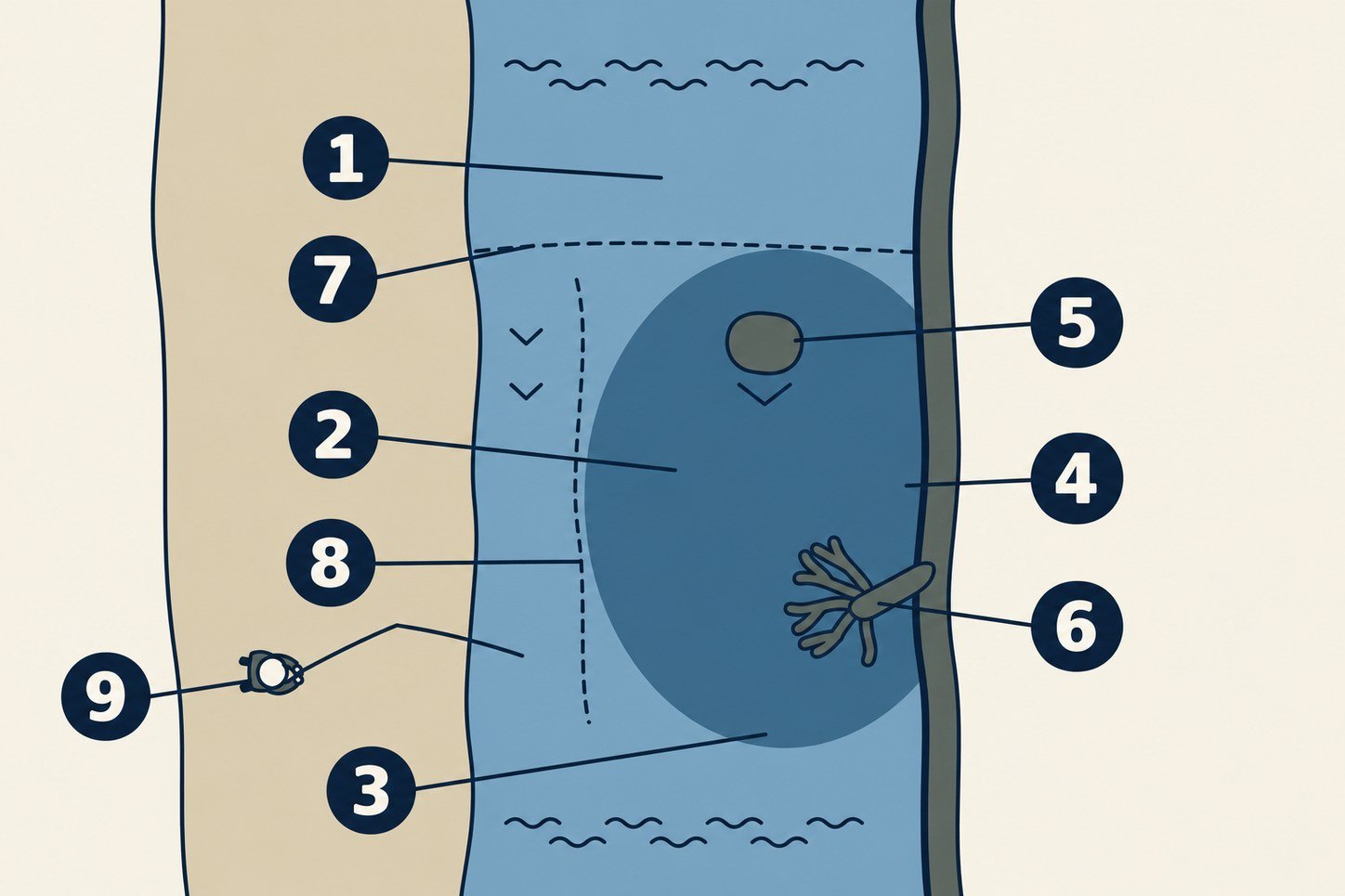
- 1. Head: below the riffle
- 2. Hole
- 3. Tailout: the lower third of the hole
- 4. Deep side under a steep bank
- 5. Boulder
- 6. Root wad
- 7. Underwater drop-off
- 8. Current edge (seam)
- 9. Angler on the bank, not in the near lane
Textbook water: walking speed, about 4–8 ft deep.
Worked Examples
A January Morning on the Bogachiel
Rules change by river and in season. Check the current WDFW sport fishing regulations and emergency rules before every trip. Coastal steelhead rules change often.
January fits the historical early hatchery-steelhead pattern. Begin access planning at Wilson. Check USGS 12042800 for flow trend, turbidity and temperature. If the river is dropping and clearing, inspect the tailout and its usable current.
Choose 10–14 lb main line matched to the rod, an 18–22 in fluorocarbon leader, a size 1 or 1/0 hook and a #8 or #10 Lil' Corky with yarn. Start with 3/16 in pencil lead, then adjust its length to maintain contact.
This time, start at the tailout, because in high green water fish often sit at the end of the run and in the tailout. Work up the run, casting near first and a little farther each time. If the tick stops, reel down and set, then keep the rod up.
A Late-February Bank Session on the Cowlitz
Rules change by river and in season. Check the current WDFW sport fishing regulations and emergency rules before every trip.
Late-February bank reports support steelhead as the target. Check the regulated Castle Rock gauge's trend and turbidity, then plan around Blue Creek's bank access and accessible platform.
In high off-color water, inspect the slower lane near shore. As green water clears, assess the tailout. Use the steelhead drift setup, with yarn or a bait choice checked against current rules. Yarnies, small yarn balls, are among the documented Cowlitz presentations, along with beads and bait.
Make a controlled cast, follow the line and adjust weight until the rig keeps moving with bottom contact. If it stops unexpectedly, reel down, set and keep the rod up.
Low, Clear Water on the Kalama
Rules change by river and in season. Check the current WDFW sport fishing regulations and emergency rules before every trip.
For this steelhead example, judge color locally because there is no live USGS gauge. After a major storm, wait for the river to settle and judge its color at the bank. Begin access planning with Beginners' Hole or Modrow Bridge.
The light-spinning option uses 8 lb main line, a fluorocarbon leader up to 30 in and a #14 or #12 Lil' Corky. Use 1/8 in pencil lead or a short slinky. Match the hook to the smaller bobber.
Inspect the center and head of holes and broken fast water. Stay back, cover the near lane and lengthen casts without adding uncontrolled slack. If the drift pauses, reel down and set, then keep the rod up.
The Bite, Hook Set, Fight and Landing
A bite can feel much like contact with a rock, and learning the difference takes time. Watch for a change: the ticking stops, the line stops drifting or the drift pauses or hesitates.
Set on a stop, pause or hesitation. Reel down to remove slack, then make a firm upward sweep and keep the rod up. Use control rather than a wild swing, especially with people nearby.
Bite or Bottom

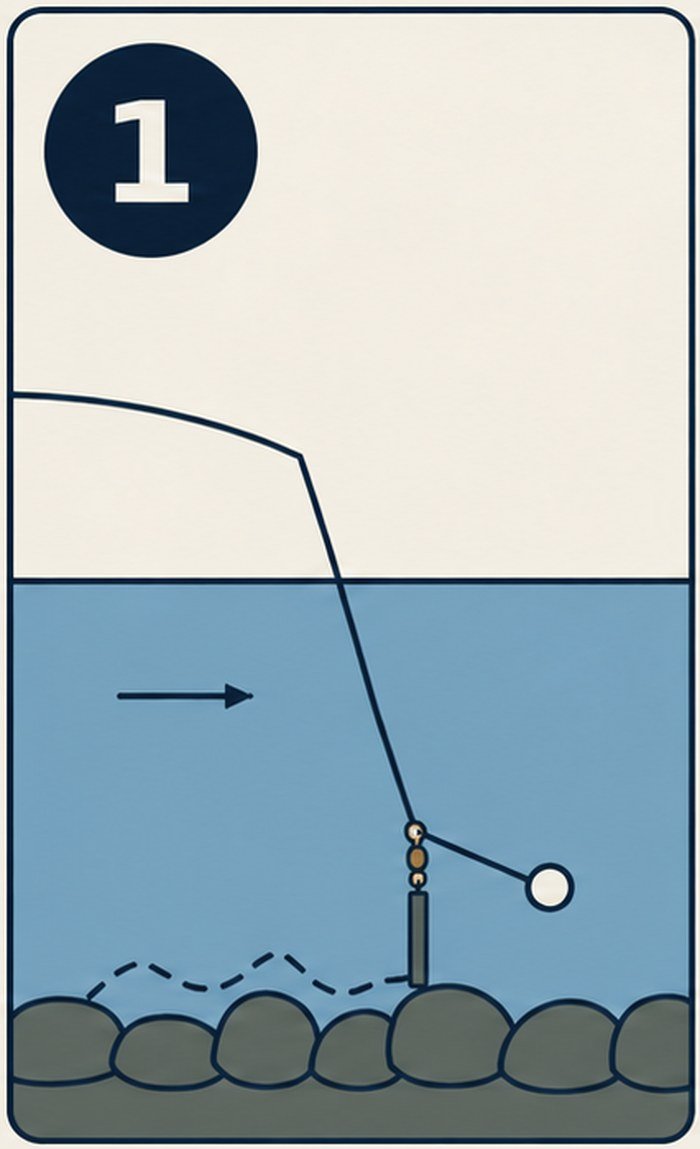 Tick stops
 Line stops drifting
 Drift pauses
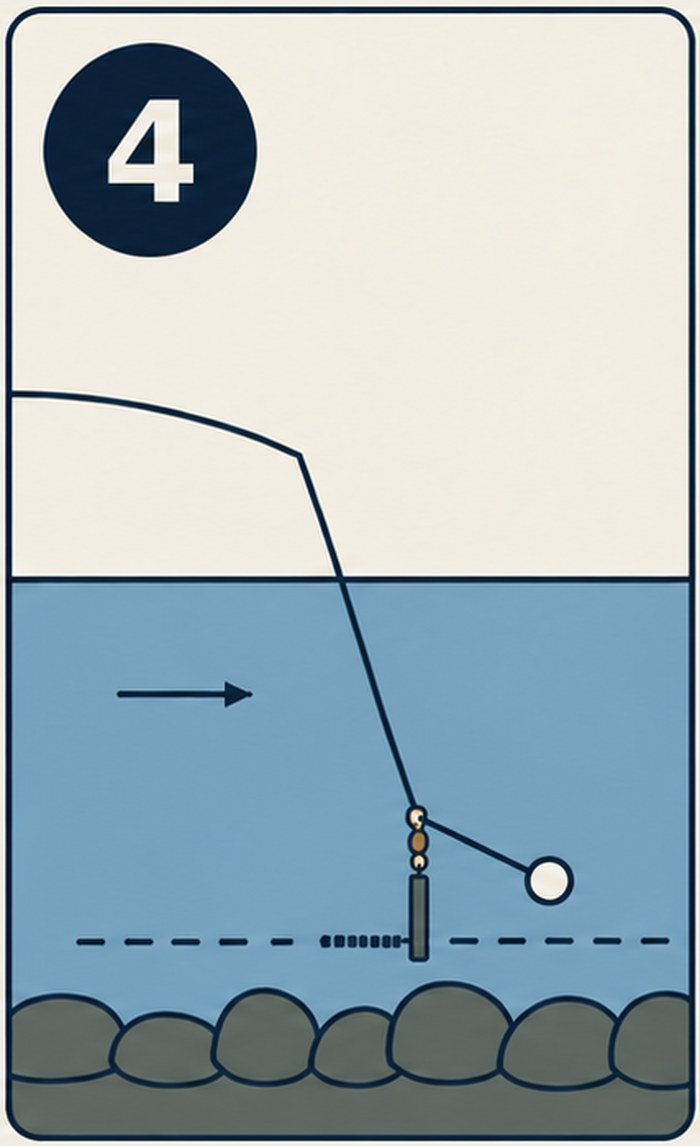 Drift hesitates
 Reel down to take up slack, then lift
- 1. Tick stops
- 2. Line stops drifting
- 3. Drift pauses
- 4. Drift hesitates
- 5. Reel down to take up slack, then lift
A rock stays fixed; a fish may pull back or change direction. Keep steady pressure and let the drag release line. Move along the bank only where footing and space allow. Have a partner ready with the net before bringing the fish close.
Guide the fish toward reachable, gentler water and use a soft net. Keep a fish intended for release off dry rocks. For a snag, point the rod toward the tackle and apply steady pressure without bending the rod against it. Never wrap line around your hand or pull toward nearby people.
Handling and Release
Plan the landing and release before making the first cast. Keep a fish you intend to release in the water, wet your hands and support its body. Keep fingers away from the gills and avoid squeezing.
Use a soft, knotless net or a suitable dehooker. If the hook is deeply lodged, cut the leader rather than prolonging the handling. Hold the fish upright, facing gentle current, and let it swim away under its own power.
Read WDFW's current retention and handling requirements for the species and stretch, including provisions affecting released steelhead.
Common Mistakes and Fixes
| Mistake | What You Notice | Fix |
|---|---|---|
| Too much weight | Constant dragging and repeated snags | Shorten the lead or use less weight. |
| Too little weight | The rig travels without useful contact | Add weight until it taps while moving. |
| Slack line | Little feel and delayed reactions | Follow the line and recover loose line as it comes toward you. |
| Lifting the rig | Contact disappears under strong tension | Ease pressure and let the weight settle. |
| Ignoring pauses | A change passes without a response | Reel down and set on an unexpected stop. |
| Repeating the same cast | Only one lane gets covered | Work near to far and move through the run where space allows. |
| Wading through holding water | You disturb the near lane | Fish it before entering. |
| Oversized bobber | The hook opening is crowded | Match hook and bobber size. |
Tips That Make the Difference
- Prepare leaders at home. Egg-loop leaders can be tied ahead or bought pre-tied. Keep them organized so replacing a rig does not become a rushed job.
- Adjust weight as the water changes. Contact matters more than keeping yesterday's setup. Add weight when the rig misses bottom and reduce it when it drags.
- Use smaller bobbers in clear water. Go to a #12 or #14 Lil' Corky.
- Increase visibility in colored water. Larger or stacked bobbers and high-contrast color families are options.
- Treat scent as an addition. Egg and shrimp scents are described in the tackle guidance; check WDFW requirements first.
- Inspect the hook and leader after a snag. Replace damaged line and check that the hook point is sound before casting again.
When It's Slow
Begin with the presentation. Is the rig moving? Can you feel contact? Is the leader tangled or the hook crowded? Adjust weight before blaming color.
Then reconsider placement. High off-color water calls attention to slower banks; low clear water to heads of holes and deeper cover. Cover another lane before repeating an unproductive cast indefinitely.
After those checks, change size, color or the condition of the bait. Clear-water bobbers can be smaller, while colored water supports larger, more visible choices. Check bait and scent rules before changing presentation.
Move to another run when access and bank space allow. Observing moving fish can help decide where to look next. If bottom snags prevent a useful drift, consider a float presentation; a spinner is another way to cover reachable water.
Safety
- Wading: Use a staff and stay out of swift water or water over your waist. Even shallow water can be unsafe when footing is poor.
- Footing: Wear boots with good grip, keep a clear route back and avoid unstable banks.
- Waders: Keep your wading belt snug.
- Rising water: Check gauges and river forecasts before and during the trip. Move before water cuts off your exit.
- Boats: Wear a personal flotation device. Safe anchoring requires knowledge beyond the fishing presentation.
- Casts and snags: Check behind you, give other anglers space and wear glasses. A freed weight or hook can travel toward you.
- Lead: Wash your hands with soap and water after handling pencil lead; hand sanitizer doesn't remove lead.
- Cold and rain: Wear waterproof layers and keep dry clothing available.
WDFW Rules to Check
Check the exact river, stretch and species before choosing tackle or planning a trip. The questions include:
- Whether fishing is allowed when you plan to go.
- Which fish may be retained and how they must be identified.
- Bait and scent requirements, including selective-gear provisions. Selective gear is WDFW's term for gear limits on some waters, so read its definition in the rules.
- Hook number, type, barb, size and gap requirements.
- Weight placement and anti-snagging provisions.
- Rod and line allowances.
- Restrictions near hatcheries, dams or other marked areas.
- Night-fishing provisions.
- Fish-handling requirements and catch-record card obligations.
Rules change by river and in season. Check the current WDFW sport fishing regulations and emergency rules before every trip.
A Guided Day and What to Ask
Decide what you want to learn, then ask how the trip will teach it. A useful goal is being able to rebuild the rig, adjust weight and recognize a controlled drift on your own.
Questions worth asking before arranging a trip:
- Will we walk and wade, fish from a boat or stop to fish banks?
- How much time will focus on drift fishing compared with other methods?
- What tackle and clothing do you provide, and do I need waders?
- When do we meet, and how much walking is involved?
- What happens if the river becomes unsuitable?
- Which species and runs are we planning around?
- Which current rules affect the tackle and locations?
- Can you teach me to rig and adjust the setup myself?
Ask your guide for their WDFW guide license number before you book.
Learn More
- WDFW Freshwater Salmon Fishing Basics — drift rigging and the cast.
- WDFW Steelhead Management — statewide background.
- WDFW Coastal Steelhead — coastal management context.
- WDFW Puget Sound Steelhead — watershed and management context.
- WDFW North Coast Winter Steelhead Creel Surveys — survey coverage and historical reports.
- WDFW Southwest Washington Fishing Reports — reported bank and boat activity.
- WDFW Water Access Sites — access planning and individual site details.
- USGS Water Data for Washington — river observations.
- NOAA Northwest River Forecast Center — river forecasts.
- USGS Turbidity and Water — understanding cloudiness.
- WDFW Sport Fishing Regulations and Emergency Rules — current rules to check before every trip.
Glossary
- Tick
- The feel of the weight touching bottom.
- Drift Bobber
- A buoyant lure that helps hold the hook above the rocks.
- Pencil Lead
- Lead wire cut to length for weight.
- Slinky
- Cord filled with lead shot, used as a weight.
- Leader
- Line between the swivel and the hook.
- Egg Loop
- A snell that leaves a loop to hold bait against the hook shank.
- Back-Bouncing
- Working a weighted rig downstream from an anchored boat.
- Riffle
- Shallow, moving water with a broken surface.
- Tailout
- The shallowing end of a pool above the next riffle.
- Seam
- The boundary between currents moving at different speeds.
- Swing
- The rig's movement toward the bank as the line tightens.
- Drag
- The reel mechanism that releases line under pressure.
- Hydrograph
- A chart of river measurements over time.
- Turbidity
- Water cloudiness caused by suspended material.
- Creel Survey
- WDFW interviews with anglers about their fishing.
- Selective Gear
- WDFW term for gear limits on some waters; read its definition in the rules.
Guides Who Specialize in This
More River Methods
Explore Side Drifting, Float Fishing, Plunking and Pulling Plugs for other river presentations.
At a Glance
| Field | Summary |
|---|---|
| Main Species | Steelhead and salmon. |
| Water | Rivers, from shore or an anchored boat. |
| In Short | Move a weighted corky-and-yarn presentation near bottom with the current. |
| Skill Level | Straightforward to begin; recognizing bites takes practice. |
| Key Gear | Matched rod, reel and line; leader, swivel, pencil lead or slinky, drift bobber and egg-loop hook. |
| Best Times | Use the river-specific historical timing notes and check current rules. |
| Conditions | Follow flow trend, color and temperature where available; learn your river's numbers over time. |
On This Page
- What It Is and When It Beats Other Methods
- Target Species and Where in Washington
- River by River
- Seasons and Conditions
- Rods, Reels, Line and Leader
- Terminal Tackle and Rigging, Step by Step
- By Species
- Technique, Step by Step
- Worked Examples
- The Bite, Hook Set, Fight and Landing
- Handling and Release
- Common Mistakes and Fixes
- Tips That Make the Difference
- When It's Slow
- Safety
- WDFW Rules to Check
- A Guided Day and What to Ask
- Learn More
- Glossary
- Guides Who Specialize in This
- More River Methods