
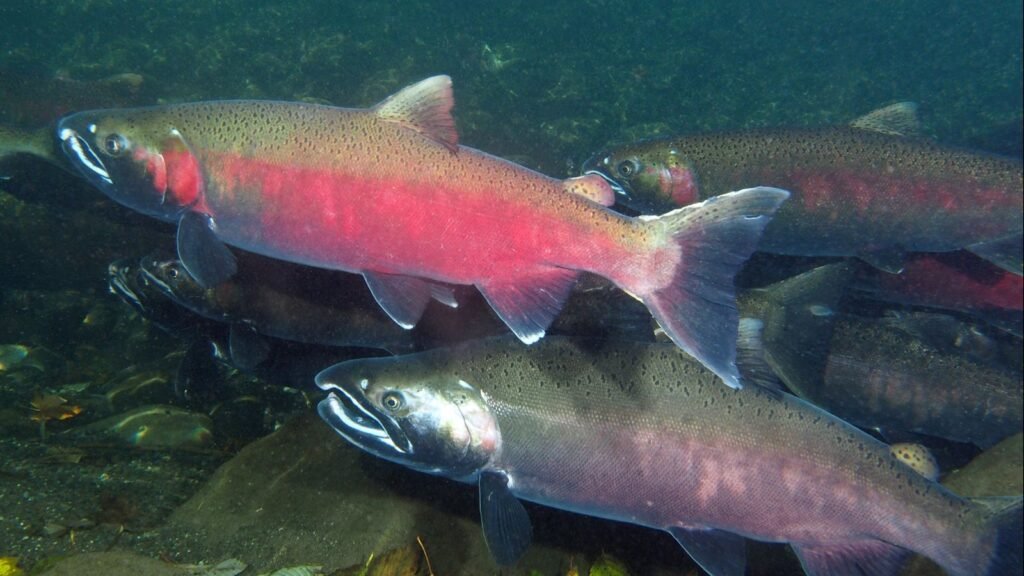
October Is Coho Country
Ask a Puget Sound angler what gets them excited about October, and coho salmon will be near the top of the list. These fish are a fall favorite for good reason. They’re strong, lively, and available across a mix of saltwater and river environments.
Most coho run about 6 to 12 pounds, though they can grow considerably larger. A fish in that typical range is plenty to keep an angler busy, especially in moving water.
One thing that makes coho interesting is how widely they use our local waterways. They return to coastal streams and tributaries of larger rivers, including some surprisingly small neighborhood creeks. Give them cold, clean water year-round, and even a modest stream can become important salmon habitat.
For anglers, October is a month to pay attention to the water, not just the calendar.
Why the First Good Rain Matters
Returning coho often gather near stream mouths before moving upstream. They’re waiting for enough water to make the next part of their journey.
A fall rain can change that picture quickly.
Here’s what I pay attention to:
- Recent rainfall: A meaningful change in flow can encourage fish to move.
- Stream mouths: These are natural gathering points for returning salmon.
- River conditions: Watch how the water changes after rain rather than assuming every rainy day is productive.
- Timing: Conditions that looked quiet on one visit may look entirely different after a change in flow.
There’s no magic formula. Rain doesn’t guarantee fish, and a river full of water isn’t automatically a better place to fish.
The trick is learning how your local water responds.
Saltwater or River? Pick Your Day
Puget Sound gives coho anglers a choice of settings. Some prefer the open feel of saltwater, while others would rather walk a riverbank with a rod and a small selection of tackle.
Both approaches reward observation.
In saltwater, pay attention to changing water conditions and visible fish activity. On a river, take time to read the current. Look for softer water alongside stronger flow, natural travel corridors, and places where fish can move without constantly fighting the current.
Keep your presentations simple and adjust them to the water in front of you. There’s more value in making a thoughtful cast than endlessly changing tackle.
Remember that salmon gathering at a stream mouth doesn’t necessarily mean fishing is permitted there.
Plan Around the Fish, Not Just the Weekend
If you’re new to coho fishing, going with someone who knows the local water can shorten the learning curve.
Browse our coho and salmon guide or find a local fishing guide who works Puget Sound and its rivers.
Before heading out, always check the current WDFW fishing regulations for the specific water you intend to fish.
October coho fishing is a good reminder of why we love this place. A little rain, a familiar river, and the possibility of fresh salmon moving upstream can make an ordinary fall morning feel pretty special.